

Many organizations treat employee offboarding as an administrative footnote, handled through manual checklists and disparate email threads. This approach creates a significant control gap that exposes the business to unauthorized access and regulatory non-compliance. Relying on human intervention to revoke access across multiple domains is no longer a viable security strategy in a high-velocity IT environment.
The reality is that manual offboarding is inherently inconsistent. When an employee departs, the window between their final hour and the actual termination of their logical access represents a primary vulnerability. Dedicated offboarding software is not a luxury; it is a fundamental requirement for any organization serious about identity governance and risk mitigation.
The Invisible Risk of Manual Hand-offs
Manual processes rely on a chain of human communication that is prone to failure. An HR notification might sit in an IT inbox for hours or days, during which time a former employee retains full access to sensitive systems. According to industry data, nearly a third of organizations take more than 24 hours to offboard an ex-employee, creating an unacceptable window for data exfiltration or system disruption.
This delay is often the result of "task fatigue" within lean IT teams. Managing a growing list of SaaS applications and on-premise systems requires meticulous attention to detail that manual processes cannot guarantee. Every forgotten account is a potential entry point for a malicious actor or a disgruntled former staff member.
The lack of a centralized, automated trigger means there is no single source of truth for termination. Security is compromised when "deactivation" is treated as a best-effort task rather than a mandatory, time-sensitive protocol. Organizations must move toward a system where access removal is instantaneous and immutable.

The Complexity of the Modern Identity Stack
Modern enterprises operate across complex, hybrid environments that span local Active Directory domains and dozens of cloud-native applications. Manual offboarding requires IT administrators to log into each individual system to revoke permissions, a process that is both time-consuming and error-prone. This complexity makes it difficult to ensure that every "ghost account" has been identified and purged.
Identity matching becomes a significant hurdle when usernames and email formats vary across different platforms. Without a sophisticated platform to bridge these gaps, IT teams often miss obscure or secondary accounts that still hold elevated privileges. This accumulation of "zombie" access is a direct threat to the integrity of the corporate network.
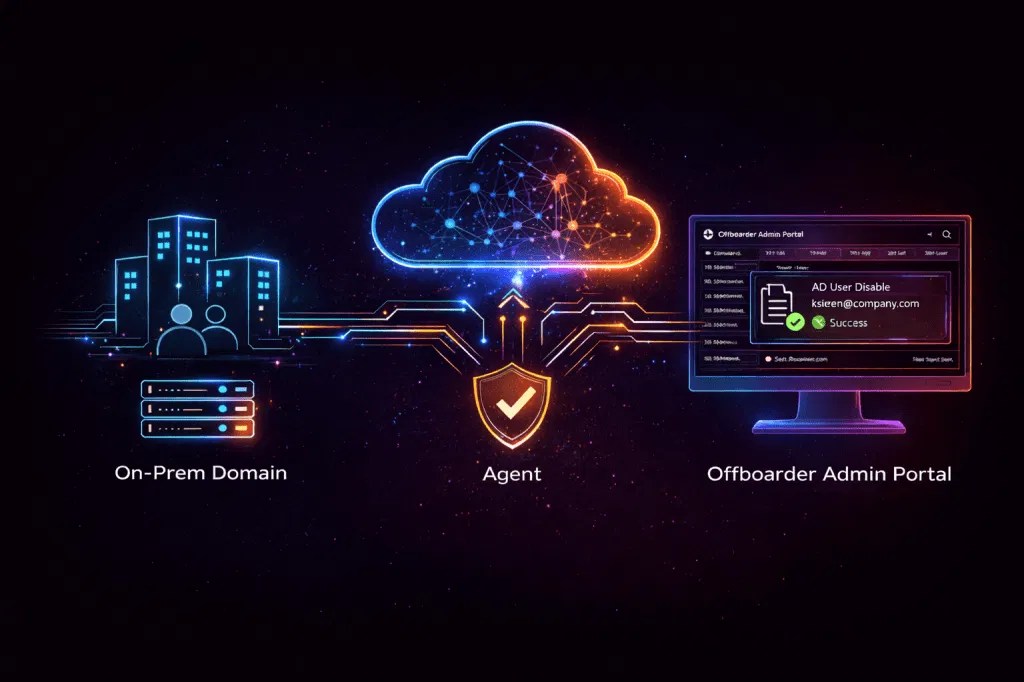
The Offboarder platform addresses this by providing multi-domain support with flexible identity matching. It ensures that when a termination is triggered, the system scans and removes access across all linked environments simultaneously. Automation eliminates the need for manual cross-referencing, ensuring a complete and clean break from the organization's digital assets.
Compliance as a Business Imperative
For organizations in regulated industries like FinTech, Healthcare, or Education, offboarding is a core component of compliance frameworks such as ISO 27001 and SOC 2. These standards require explicit proof that access is revoked promptly and that a clear audit trail exists for every termination. Relying on manual spreadsheets or email confirmations is insufficient for a rigorous audit.
Auditors demand evidence that includes specific timestamps, the identity of the person who initiated the request, and the confirmation of successful deactivation. SOC 2, in particular, focuses on the "promptness" of access removal to ensure that no inactive personnel have access to sensitive data. A failure to provide this evidence can result in failed audits and loss of customer trust.
The Offboarder security and compliance features are designed to generate audit-ready evidence automatically. The platform captures every step of the offboarding lifecycle, creating a tamper-resistant record that satisfies the most demanding governance requirements. Consistent logging helps turn activity into accountability.

The Offboarder Advantage: HR as the Authoritative Trigger
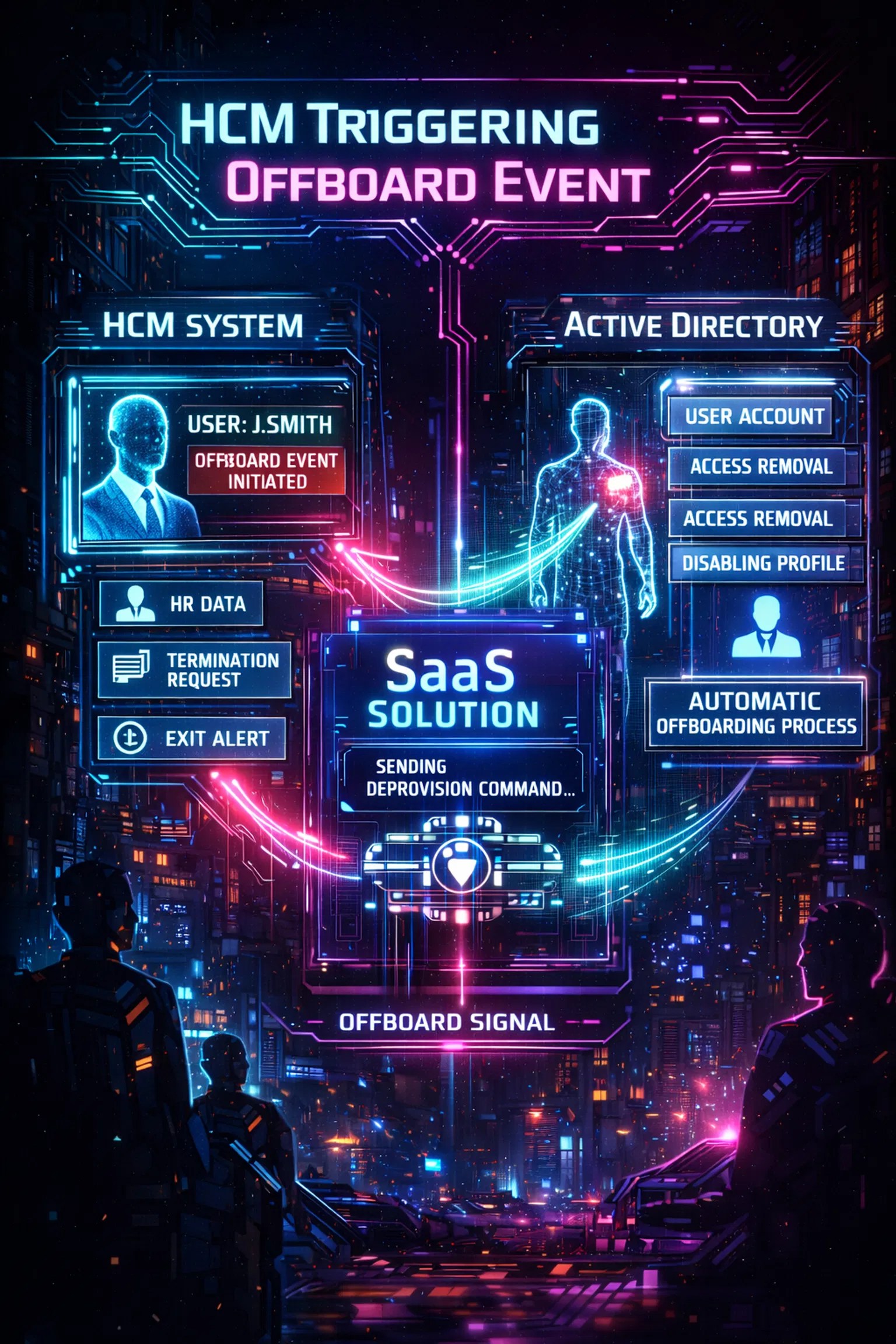
The most effective way to eliminate offboarding risk is to use HR as the authoritative trigger. By integrating directly with Human Capital Management (HCM) systems, the offboarding process starts the moment an employee's status changes in the HR record. This removes the "middleman" and ensures that security actions are synchronized with business reality.
The platform utilizes an HR-triggered approach to standardize the entire offboarding lifecycle. This ensures that no manual request is needed for the core deactivation tasks to begin. The speed of automation ensures that access is revoked at the exact moment of termination, closing the vulnerability window entirely.
Furthermore, the implementation of a lightweight on-prem agent allows the cloud-native platform to interact securely with internal systems. This hybrid architecture ensures that even legacy systems behind a firewall are brought into the automated workflow. Standardizing the trigger is the first step toward a zero-trust security posture.

Beyond Account Deactivation: Comprehensive Evidence Capture
True offboarding governance goes beyond simply disabling a user account. It requires a comprehensive view of the entire transition, including the removal of logical access and the capture of all relevant logs. Organizations must be able to prove that every permission, from file access to administrative rights, has been systematically revoked.
The importance of termination of access controls cannot be overstated. A single missed credential can bypass existing security layers and provide a backdoor into the environment. Dedicated software ensures that these technical gaps are closed through rigorous, automated validation.
Offboarder's built-in WAF protection and secure communication channels ensure that the offboarding commands themselves are protected from tampering. This creates a secure, verifiable process that stands up to the scrutiny of internal and external auditors. Robust evidence capture is the difference between assuming security and proving it.
Establishing the Standard for Offboarding
Organizations must recognize that manual offboarding is a liability that increases as the business scales. The operational risk associated with human error and delayed revocation is too high to ignore in a modern security landscape. Transitioning to a dedicated platform like Offboarder provides the consistency and speed required to protect corporate data and maintain compliance.
- Speed: Immediate revocation minimizes the window of opportunity for unauthorized access.
- Consistency: Automated workflows remove the variability of human performance.
- Proof: Comprehensive audit logs provide the evidence needed for ISO 27001 and SOC 2 audits.
Adopting an automated solution is a strategic investment in the organization's security posture and long-term resilience. By eliminating the manual handoffs that plague traditional processes, businesses can focus on growth while maintaining a hardened security perimeter. Automated offboarding is the only way to ensure that a departing employee truly has their access fully and finally terminated.
Leave a Reply