


Organizations frequently rely on contractors, freelancers, and third-party vendors to fill critical talent gaps. However, these temporary workers rarely reside within the primary Human Resources Information System (HRIS). This omission creates a significant "control gap" in the offboarding process.
Standard offboarding workflows often rely on an HR-triggered event to initiate access removal. When a user is absent from the HRIS, the automated trigger fails to fire, leaving sensitive systems vulnerable to orphaned accounts. Managing these identities manually introduces human error and technical debt.
Security teams must bridge this visibility gap to maintain a robust security posture. Automating access removal for non-employees is no longer optional; it is a fundamental requirement for modern governance.
The SOC 2 Compliance Risk: Why Manual Removal Fails
Compliance frameworks like SOC 2 and ISO 27001 mandate the timely termination of logical access. Specifically, SOC 2 Criteria CC6.1 and CC6.3 require organizations to ensure that access is revoked when no longer required. For many auditors, "timely" means within one business day or less.
Relying on manual spreadsheets or email notifications to manage contractor departures is inherently high-risk. These processes lack the tamper-resistant nature of automated systems. If a project manager forgets to notify IT that a contract has ended, the contractor's access remains active indefinitely.
Orphaned accounts are prime targets for exploitation. Because these accounts are not actively monitored or tied to a current employee, suspicious activity often goes unnoticed. Automating the lifecycle of these identities ensures that access is killed the moment the contract expires.
Consistent automation helps turn potential vulnerabilities into verifiable security controls.
The Technical Barrier: The Identity Matching Challenge
The primary technical obstacle in offboarding contractors is identity matching. In a standard employee offboarding scenario, the HRIS provides a unique identifier: such as an Employee ID: that maps directly to Active Directory or SaaS applications. Contractors often lack this structured data link.
Without a consistent primary key, IT teams struggle to determine which accounts belong to which contractor. This results in "shadow identities" where a single individual may have multiple accounts across different platforms with no unifying record. Manual cleanup becomes a guessing game that risks disrupting active services.
To solve this, organizations need a platform that supports flexible identity matching. This allows the system to correlate identities based on multiple attributes rather than a single HRIS ID.

Solution: Implementing Flexible Identity Matching
Offboarder addresses the contractor visibility gap through advanced identity matching logic. The platform does not require a user to exist in a traditional HRIS to initiate a secure offboarding event. Instead, it utilizes various data points to ensure the correct access is removed.
The platform can match identities using several common attributes:
- Primary Email Address: Mapping the contractor's corporate or personal email to their system accounts.
- User Principal Name (UPN): Directly targeting the account identifier within cloud directories.
- Custom Metadata: Using project codes or specific tags to group and identify contingent workers.
By using flexible matching, the platform ensures that even if a contractor is only tracked in a CSV or a secondary database, their access across Active Directory, Microsoft 365, and other systems remains governed. This approach eliminates the need for a "perfect" HRIS record before automation can occur.
Flexible matching ensures that security controls remain effective even when data sources are fragmented.
Feature Spotlight: The Offboarder Contractor Management Module
Recognizing that many organizations manage contractors outside of HR, Offboarder has introduced a dedicated Contractor Management feature. This tool acts as the authoritative trigger for users who do not exist in the primary HR system. It allows teams to centralize the lifecycle of third-party access without bloating the HRIS.
The Contractor Management module allows administrators to input contract end dates directly into the Offboarder platform. When the specified date is reached, the system automatically triggers the full offboarding workflow. This replaces manual reminders with a programmed, reliable execution.
Key capabilities of this feature include:
- Scheduled Termination: Pre-defining the exact date and time access should be revoked.
- Multi-Domain Support: Disabling accounts across multiple on-prem and cloud environments simultaneously.
- Status Monitoring: Providing real-time visibility into the current access state of every external worker.
This feature ensures that third-party access follows the same rigorous standards as full-time employees. It provides a single point of control for all non-HR identities.
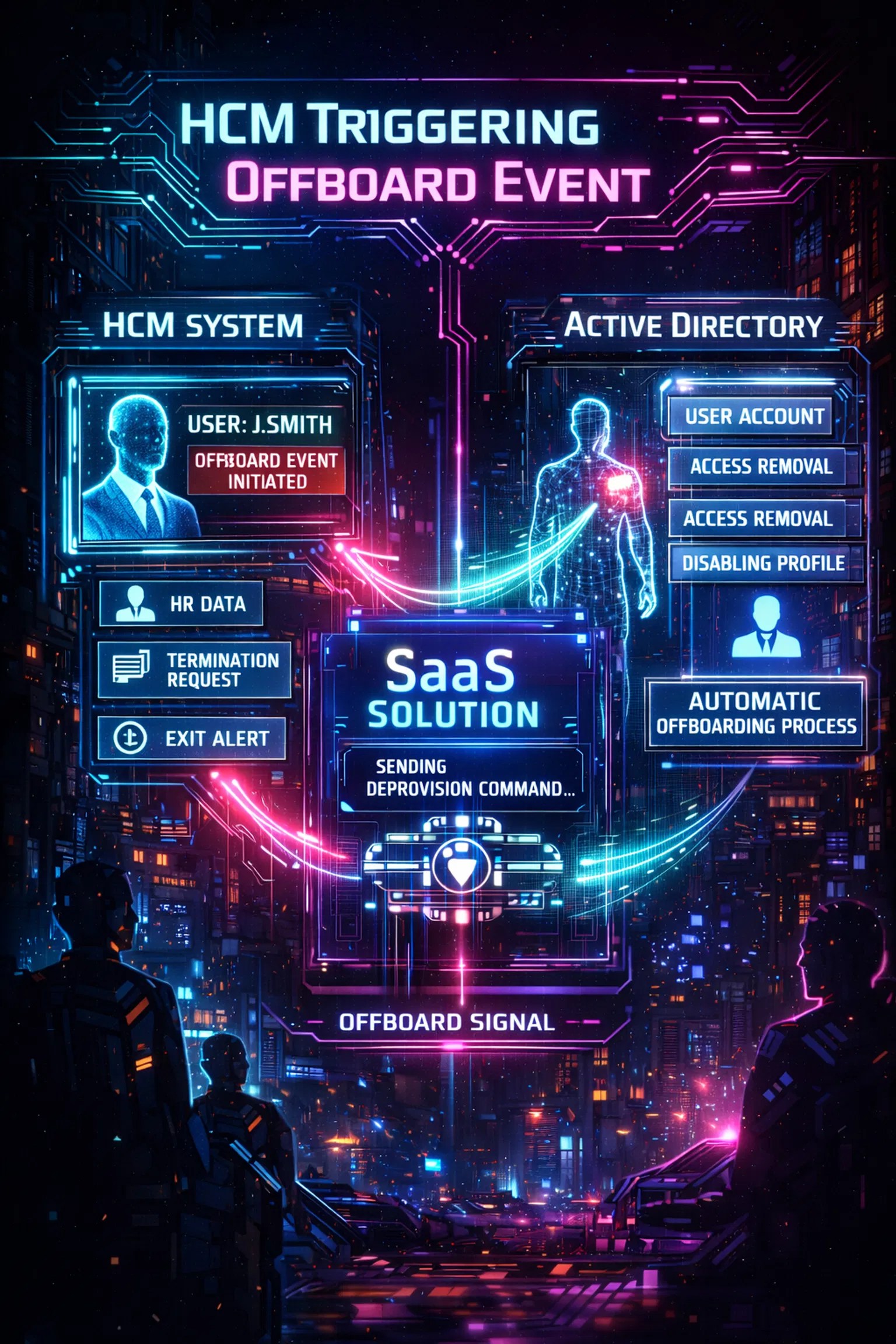
Workflow: Automating the Non-HR Trigger
Automating access removal for contractors involves a three-step process that prioritizes speed and accuracy. This workflow bypasses the traditional HRIS dependency while maintaining full audit-readiness.
1. Data Ingestion
The process begins by importing contractor data into the platform. This can be done via a direct API connection to a procurement tool, a periodic CSV upload, or manual entry in the Contractor Management module. The key is establishing the termination date as the "authoritative trigger."
2. Automated Execution
Once the termination date is reached, the platform initiates the deprovisioning commands. It communicates with the on-prem agent to disable Active Directory accounts and interacts with SaaS APIs to revoke application access. This happens without human intervention, ensuring the 24-hour SOC 2 requirement is met.
3. Success Verification
After the commands are sent, the platform verifies that the access has been successfully removed. It checks the target systems to confirm that accounts are disabled or deleted. If a failure occurs, the system alerts the security team immediately, preventing "silent failures" that leave access open.
A structured workflow replaces the unpredictability of manual tasks with the reliability of code.
Capturing Evidence for Audit-Readiness
For organizations in regulated industries like FinTech or Healthcare, simply removing access is not enough. You must be able to prove that access was removed, by whom, and exactly when. In a manual process, this evidence is often scattered across email threads and helpdesk tickets.
The platform automatically generates a comprehensive audit trail for every contractor offboarding event. This evidence capture includes the initial trigger, the specific systems affected, and the confirmation of success from the target environment. This documentation is central to passing SOC 2 Type II audits.

By centralizing this data, the platform provides:
- Tamper-Resistant Logs: Ensuring that evidence of access removal cannot be altered.
- Consistency: Providing the same level of documentation for a one-week contractor as for a ten-year employee.
- Searchability: Allowing internal audit teams to quickly pull reports on all contractor terminations within a specific period.
Comprehensive logging helps turn daily security activity into permanent accountability.
Closing the Contractor Control Gap
Allowing contractors to remain outside of automated offboarding workflows is a significant risk to organizational security. The "contractor blind spot" creates a pathway for unauthorized access and compliance failures that can jeopardize partnerships and certifications.
Organizations should adopt a platform that treats all identities: regardless of their source: with the same level of scrutiny. By utilizing flexible identity matching and dedicated contractor management tools, IT teams can eliminate manual handoffs and ensure timely termination.
The goal is to move from a reactive posture to a proactive, governed state. Automating the removal of contractor access ensures that the organization remains secure and audit-ready at all times.
Automating the offboarding lifecycle for all users is the only way to ensure total logical access control.

Ready to secure your third-party access?
Explore how our automated offboarding solution can help you bridge the HRIS gap. You can also contact our team to learn more about our new contractor management features.
Leave a Reply