
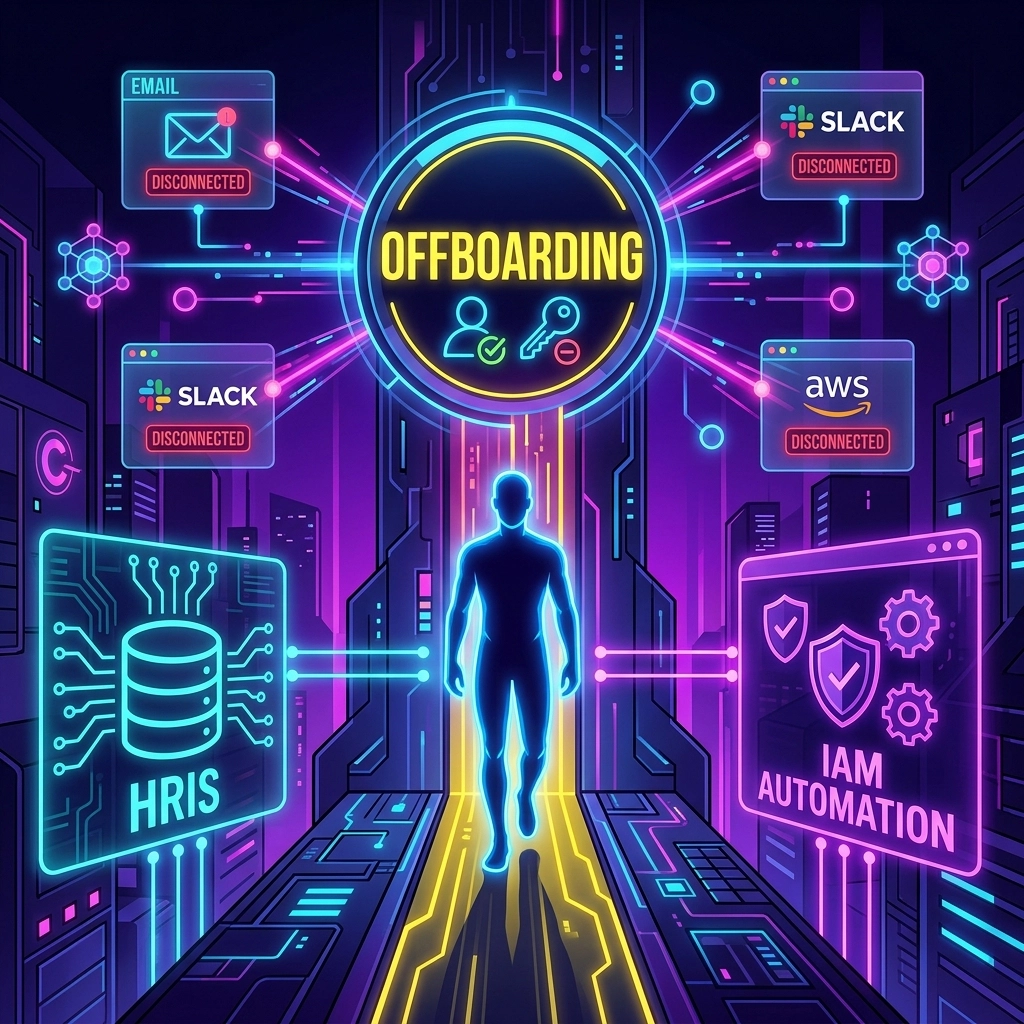
Manual offboarding is a documented liability. When IT teams rely on Slack messages, emails, or Jira tickets to trigger access removal, the organization creates a window of vulnerability. This window: the time between an employee's departure and the actual revocation of their digital identity: is where security breaches and compliance failures occur.
The only way to eliminate this risk is through the tight integration of the Human Resources Information System (HRIS) and Identity and Access Management (IAM) automation. This integration ensures that when a person is terminated in the HR system, their access is revoked across the entire environment without human intervention. This process creates a tamper-resistant trail of evidence that satisfies the most stringent requirements of SOC 2 and ISO 27001.
The Source of Truth: Why HRIS Must Lead
In most organizations, the HRIS acts as the definitive record of the employee lifecycle. Whether the company uses Workday, BambooHR, ADP, or HiBob, this system contains the start dates, role changes, and termination dates of every staff member. However, this data often sits in a silo, disconnected from the technical systems that grant access to data and infrastructure.
When HR and IT operate in silos, the organization suffers from "technical debt" in the form of orphaned accounts. An orphaned account is an active login for a user who is no longer with the company. These accounts are primary targets for threat actors because they are rarely monitored. By establishing the HRIS as the single source of truth for the IAM system, the organization ensures that the identity lifecycle is governed by business reality rather than manual ticket completion.
Integrating these systems transforms offboarding from a reactive task into a programmatic event. The goal is to move away from "hope-based security" where the organization hopes IT received the termination notice in time. Instead, the focus shifts to a governed workflow where the HR status change programmatically triggers the de-provisioning sequence.
Mapping the Integrated Architecture
The integration between an HRIS and an IAM platform requires a secure bridge to transport identity data. Modern architectures typically utilize APIs (Application Programming Interfaces) to facilitate this exchange. The IAM platform queries the HRIS at regular intervals: or receives a webhook: to identify users whose status has changed to "terminated."
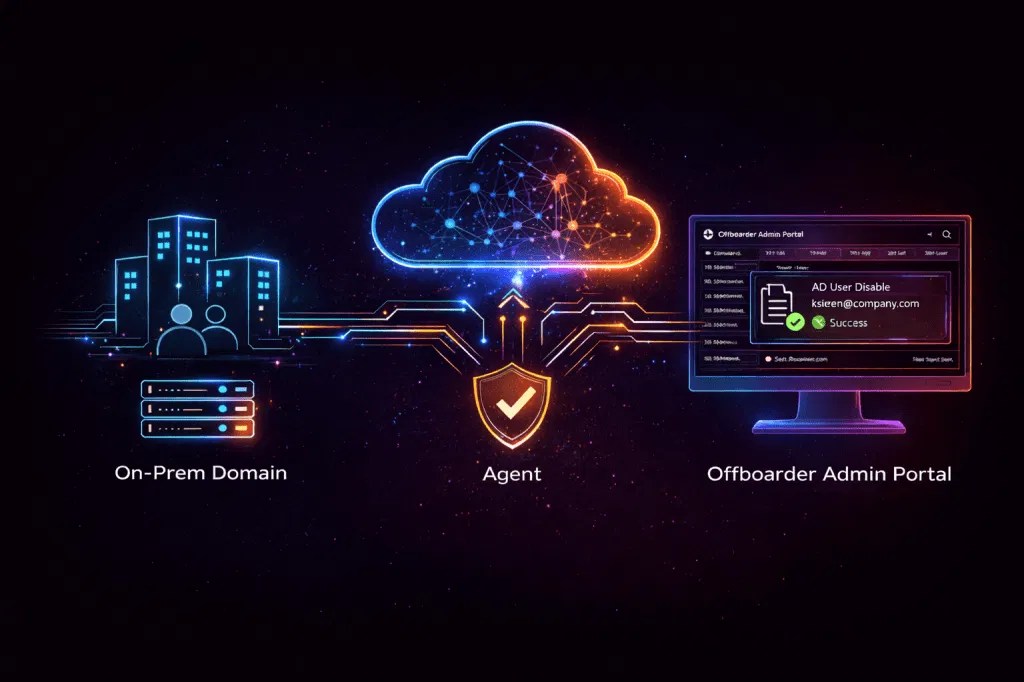
As shown in the architecture overview, the connection must be secure and often involves a cloud-based agent that communicates between the on-premises directory services and the cloud-based HRIS. This setup allows for a centralized control plane where security teams can monitor the status of all offboarding events in real-time.
A common challenge in this architecture is the "Last Mile" of access. While deactivating a primary account in Active Directory or Okta is straightforward, ensuring that access is revoked in every downstream SaaS application is more complex. The integration must be designed to cascade the termination signal from the HRIS through the IAM system and out to every connected service, including Salesforce, GitHub, and internal databases.
Step 1: Establish the Authoritative Trigger
The first technical requirement for audit-ready offboarding is defining the trigger. The organization must decide which data field in the HRIS serves as the "kill switch." For most, this is the termination_date or a change in employment_status.
Once the trigger is defined, the automation platform must be configured to monitor this field. If the HRIS indicates an involuntary termination, the IAM system should be capable of executing an immediate "emergency" offboarding. For standard departures, the system can schedule the revocation for the end of the employee's final business day.
Standardizing this trigger removes the ambiguity that leads to mistakes in the access management lifecycle. Consistency is the foundation of auditability.
Step 2: Data Mapping and Attribute Matching
For automation to work, the IAM system must be able to match the record in the HRIS to the identity in the directory. This is usually accomplished via a unique identifier, such as a corporate email address or an employee ID number.
Data mapping ensures that when "John Doe" is terminated in BambooHR, the system knows exactly which "jdoe@company.com" account to disable in Azure AD. Without precise mapping, the automation will fail, or worse, it will disable the wrong user. Security leaders must ensure that these attributes are synchronized and cleaned before attempting to automate the workflow.
This stage is also where role-based access control (RBAC) comes into play. The integration should not only handle the removal of access but also the transfer of ownership for critical resources. If a manager departs, the integrated workflow can automatically trigger a notification to reassign their direct reports or their ownership of sensitive folders and cloud buckets.
Step 3: Executing the De-provisioning Sequence
Offboarding is rarely a single action. It is a sequence of events that must happen in a specific order to prevent data loss or service disruption. A typical automated sequence initiated by an HRIS trigger includes:
- Immediate Session Invalidation: Terminating all active web sessions and revoking OAuth tokens to prevent immediate access.
- Account Disablement: Disabling the primary identity in the directory (e.g., Active Directory or Google Workspace).
- License Reclamation: Removing the user from paid SaaS groups to reduce operational waste.
- Resource Reassignment: Moving the user's files to a manager's hold or archiving their mailbox.
- Evidence Logging: Recording every action taken, including the timestamp and the outcome (success or failure).
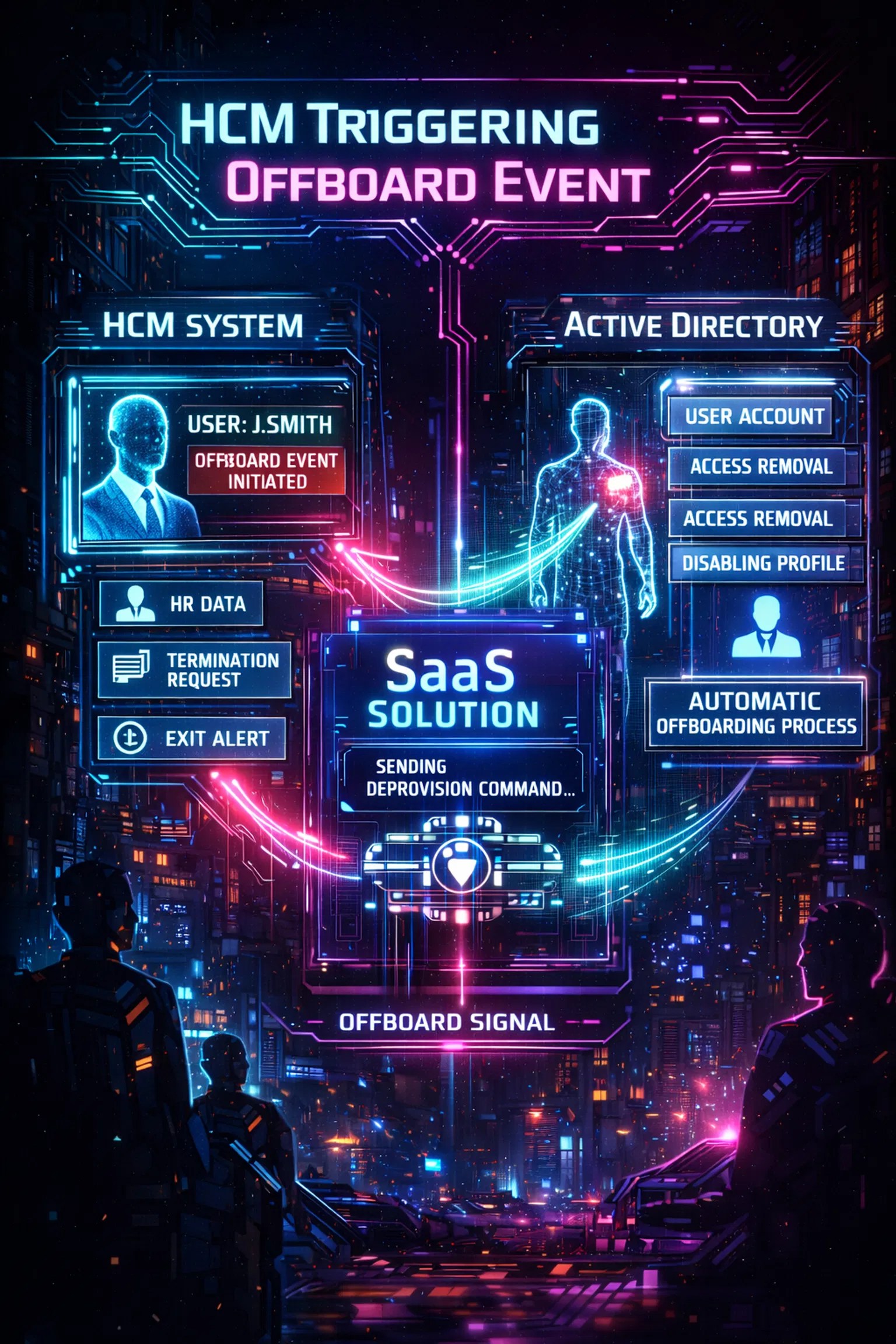
The visual representation of this workflow highlights the shift from manual labor to automated precision. Each step in the sequence is a control point that can be verified by an auditor. By automating these steps, the organization ensures that no system is overlooked, even those that are rarely used by the IT team.
Achieving Audit-Ready Compliance
Compliance frameworks like SOC 2 and ISO 27001 are heavily focused on the "timeliness" of access removal. Auditors will often ask for a list of terminated employees and then request evidence showing exactly when their access was revoked.
In a manual environment, providing this evidence is a nightmare. It involves gathering screenshots from multiple systems, which is time-consuming and prone to tampering. In an integrated environment, the IAM platform generates an automated report. This report serves as a tamper-resistant record that links the HRIS termination event to the specific technical actions taken by the system.
For organizations looking to automate SOC 2 offboarding requirements, the HRIS integration is the most critical piece of the puzzle. It transforms a subjective process into an objective one. An auditor does not need to trust that the IT manager did their job; they can see the log file showing the automation executed within seconds of the HR trigger.
Solving the Contractor Gap
One of the biggest security risks in modern enterprises is the "Contractor Gap." Contractors are often not managed in the main HRIS, leading to a situation where they retain access long after their contract has ended. This is a significant finding in many security audits.
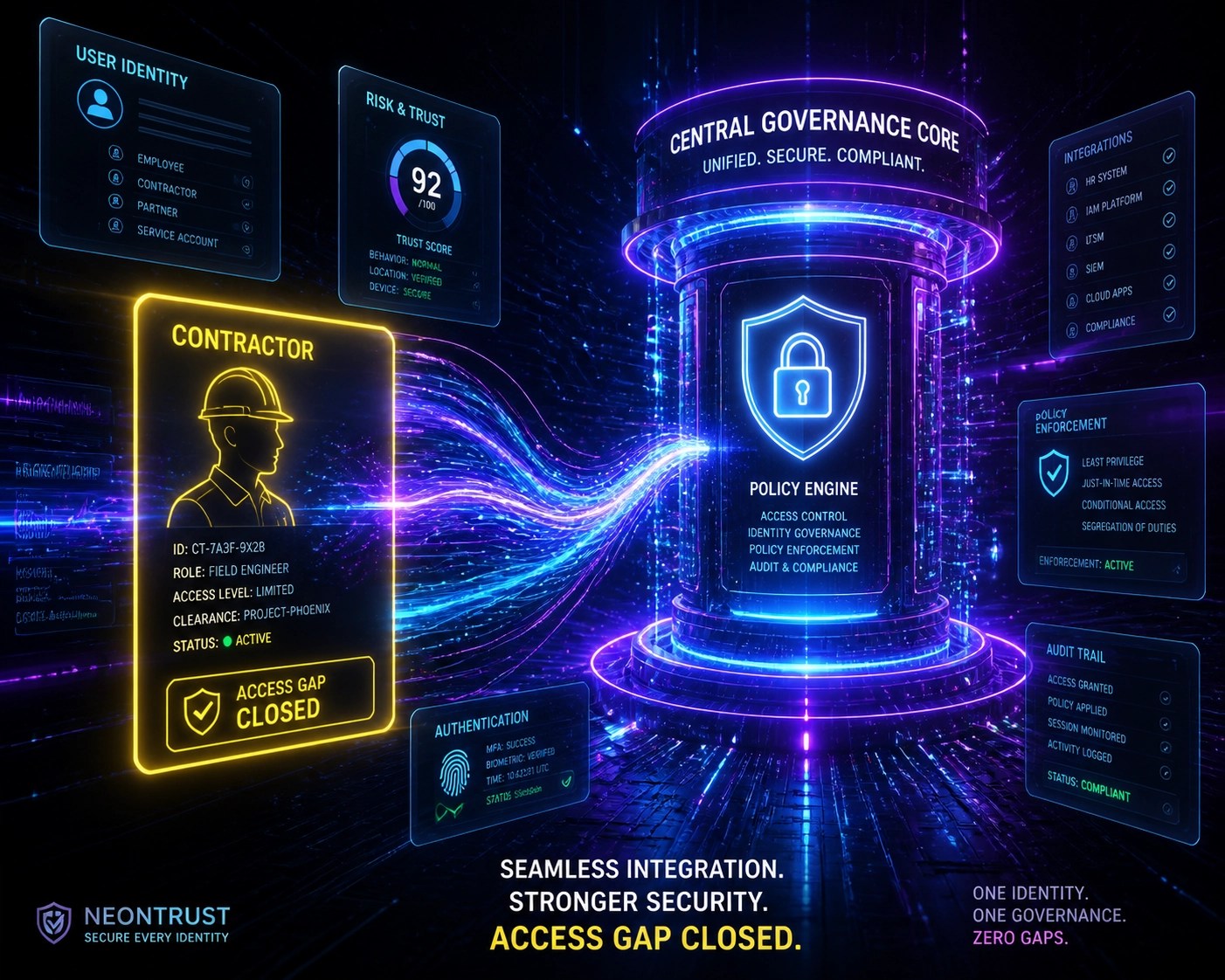
To address this, the IAM automation strategy must include a module for external identities. If the contractor is not in the HRIS, they should be managed in a secondary authoritative source that follows the same automated logic. Offboarder provides specific tools to manage these external identities, ensuring that they are subject to the same rigorous de-provisioning standards as full-time employees. Governance must be universal to be effective.
Operational Efficiency and Risk Mitigation
Beyond security, the integration of HRIS and IAM offers substantial operational benefits. Manual offboarding takes time: often several hours per employee when accounting for all the different SaaS applications and local accounts. For a company with high turnover or a large workforce, this represents thousands of hours of lost productivity for the IT team.
Automation allows IT to focus on high-value projects rather than repetitive administrative tasks. Furthermore, it eliminates the risk of "human error," such as forgetting to remove a former employee from a sensitive financial system or a private GitHub repository.
Reducing operational risk is about narrowing the attack surface. Every active account is a potential entry point for a hacker. By ensuring that accounts are closed as soon as they are no longer needed, the organization significantly reduces its exposure to credential-based attacks.
Implementing the Integration: A Standard for Success
Implementing an HRIS-IAM integration is not just a technical project; it is a governance initiative. It requires collaboration between HR, IT, and Security departments. The following standards should be applied to every integration project:
- Auditability: Every action must be logged with a timestamp and a status code.
- Scalability: The system must handle both individual departures and mass layoffs without performance degradation.
- Visibility: Security teams must have a dashboard that shows the health of the integration and any failed offboarding events.
- Security: The connection between the HRIS and the IAM platform must be encrypted and use modern authentication protocols like OAuth 2.0.
For more information on the technical implementation of these controls, visit our implementation page.
Final Considerations for Security Leaders
The integration of HRIS with IAM automation is no longer a luxury for large enterprises; it is a requirement for any organization that takes security and compliance seriously. The cost of a single breached orphaned account far outweighs the investment required to automate the offboarding process.
By using the HRIS as the single source of truth, organizations can ensure that their security posture matches their business reality. This approach eliminates the "control gap" that auditors frequently target and provides the evidence needed to prove that the organization is in control of its data and its identities.
Turning activity into accountability is the ultimate goal of IAM governance. With a properly integrated system, every departure becomes a non-event: a silent, successful execution of security policy that protects the company and satisfies the auditors. To learn more about how to streamline these processes, explore our overview of access removal solutions.
Strong logging and automated triggers help turn activity into accountability. Organizations that prioritize this integration find themselves better prepared for the challenges of a modern, decentralized workforce. Integrating your HRIS with Offboarder ensures that your offboarding is not just fast, but fundamentally secure.
Leave a Reply