

Security compliance is often treated as a documentation exercise, but for SOC 2 (System and Organization Controls), the reality is much more rigorous. If an organization relies on a manual IT offboarding checklist that lives on a spreadsheet or a printed piece of paper, it is likely introducing significant risk into its compliance posture.
During a SOC 2 audit, the inspector does not just look for a policy; they look for evidence of the policy in action. A checklist that is treated as a simple administrative form rather than a security control will fail to meet the Trust Services Criteria (TSC) required for a clean report.
The Intersection of Offboarding and SOC 2 Criteria
SOC 2 is built around the COSO framework and focuses heavily on logical and physical access. When an employee leaves, several specific criteria come into play that a standard "return your laptop" checklist often ignores.
CC6: Logical and Physical Access Controls
This is the core of identity and access management (IAM). It requires that access to systems is restricted to authorized users and, more importantly, that access is revoked when it is no longer required. A manual checklist often misses "silent" access points like API keys, service accounts, or third-party SaaS tools that are not behind Single Sign-On (SSO).
CC7: System Operations
This criterion focuses on monitoring and responding to security events. If an ex-employee’s account remains active for days after termination, it creates a "control gap" where unauthorized activity can occur without being flagged. Auditors look for the timestamp of termination versus the timestamp of account disablement.
CC9: Risk Mitigation
Organizations must identify and reduce known risks. Orphaned accounts: active accounts belonging to departed users: are one of the most common vulnerabilities. A failure to automate the removal of these accounts suggests a lack of governance over the identity lifecycle.
Why Manual Checklists Fail the Audit
The primary reason manual offboarding fails SOC 2 is the lack of verifiable evidence. Even if a technician "thinks" they removed all access, the auditor requires proof of the specific time and date each action occurred.
1. The Evidence Gap
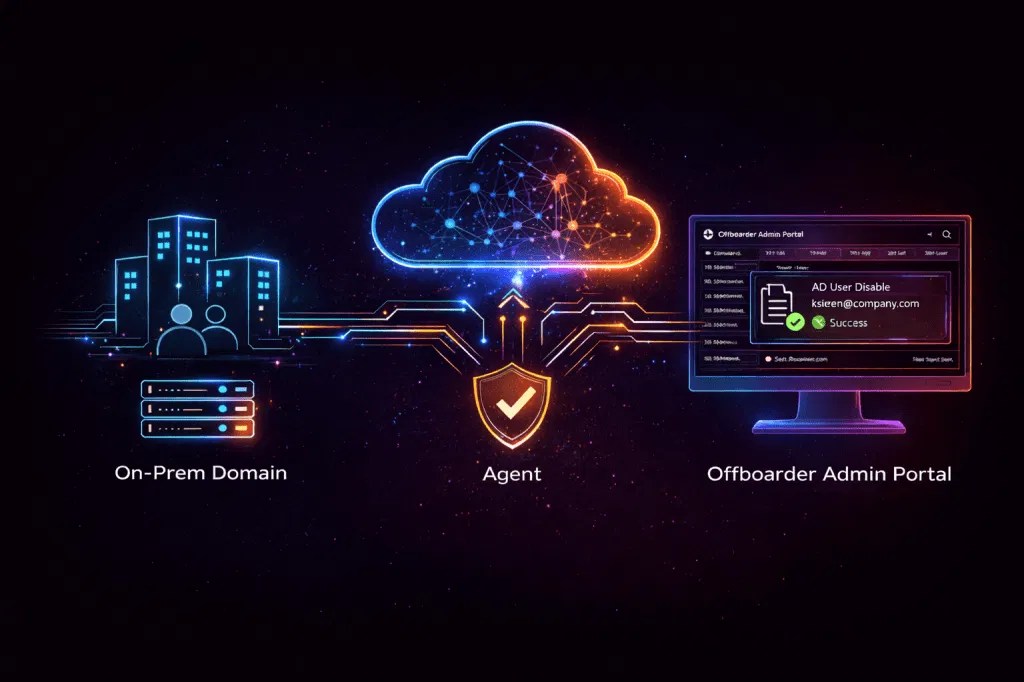
An auditor will sample recent terminations and ask for the "paper trail." If the response is a series of informal Slack messages or an un-timestamped Excel sheet, it will be flagged as an exception. The platform must provide a tamper-resistant log that links the HR termination event to the technical deprovisioning event.
2. The Speed Factor (SLA Failures)
For SOC 2 Type II, consistency over time is the metric. If a checklist takes 48 hours to complete because the IT team was busy, that 48-hour window is a period of non-compliance. Automated solutions, such as those provided by Offboarder, ensure that access is removed within minutes, maintaining a constant state of compliance.
3. Missing Shadow IT and Vendor Access
Most checklists focus on Active Directory or Google Workspace but ignore the dozens of SaaS applications used by modern teams. If a checklist doesn't account for every system in the vendor inventory, the organization remains exposed. SOC 2 requires that third-party access is managed with the same rigor as internal systems.
Identifying a "Bad" Offboarding Checklist
A checklist is a liability if it is HR-centric rather than access-centric. If the primary steps are "Return badge" and "Exit interview," the security component is being treated as an afterthought.
A SOC 2-compliant process must be risk-based. High-privilege users, such as DevOps engineers or finance managers, require a more aggressive offboarding protocol than a general intern. A one-size-fits-all checklist fails to address the specific risks associated with different levels of system access.
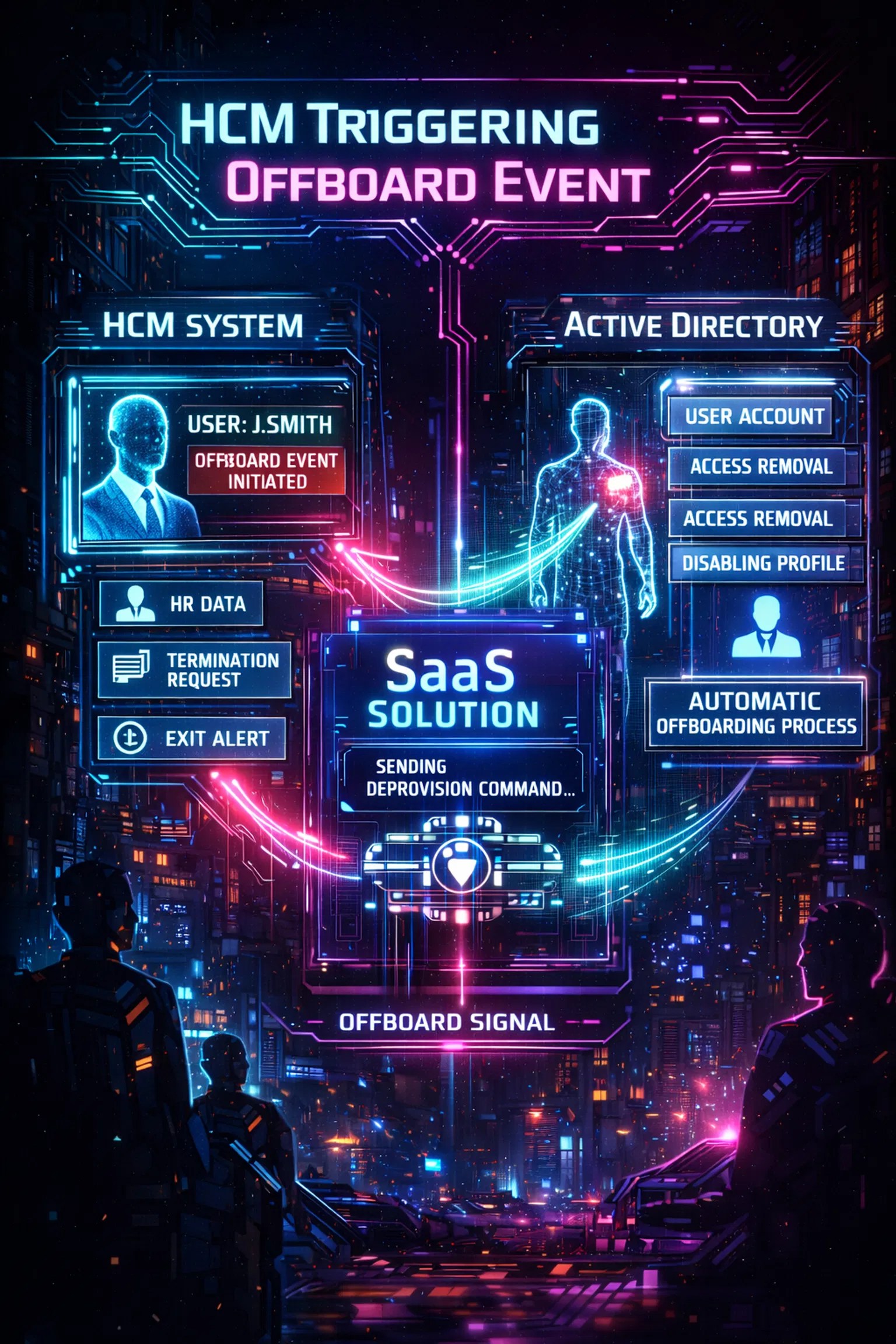
Furthermore, a checklist with no clear ownership is a governance failure. If IT only hears about a departure through the office grapevine, the "trigger" for the control is broken. Effective offboarding must be triggered by the HR system (HRIS) to ensure there is no delay between the personnel change and the security action.
The Truth About Evidence and Logs
In the world of compliance, if it isn't logged, it didn't happen. A manual checklist is easily falsified or lost. Auditors look for system-generated logs that show the transition from "Enabled" to "Disabled."
When an organization uses automated offboarding tools, every action is captured in an audit trail. This includes:
- The exact second the termination request was received from HR.
- The specific systems where access was revoked.
- The confirmation of device locks or wipes.
- The reassignment of data ownership.
This level of detail turns a "check-the-box" activity into a robust security control. Centralizing this evidence in a single portal simplifies the audit process and reduces the time spent gathering screenshots for the SOC 2 assessor.
Transitioning from a Checklist to a Workflow
The solution to SOC 2 risk is to replace the static checklist with an automated workflow. This transition moves the organization from a reactive posture to a proactive, "compliance-by-default" model.
Map the Identity Inventory
Before automation can occur, the organization must have a complete list of every system that holds user data. This includes the Identity Provider (IdP), SaaS applications, and on-premises databases. Any system not included in the automated workflow is a potential audit exception.
Automate the HR Trigger
The most critical step in securing the offboarding process is removing the "human notify" element. When a status changes in the HRIS, the deprovisioning workflow should start immediately. This ensures that even if a manager forgets to tell IT, the security controls remain intact.
Implement Risk-Based Variants
A standard offboarding flow might suffice for a general user, but involuntary terminations or high-access departures should trigger an "immediate lock" protocol. This risk-based approach aligns with the COSO framework’s emphasis on identifying and responding to specific threats.

Strengthening the SOC 2 Posture
A weak IT offboarding checklist is more than an administrative nuisance; it is a direct threat to an organization’s SOC 2 certification. By failing to provide consistent, timely, and documented access removal, companies open themselves up to both security breaches and audit failures.
The platform's role is to bridge the gap between policy and execution. By automating the offboarding process, the organization ensures that every departure follows a standardized, auditable path. This level of consistency is exactly what auditors look for when assessing the maturity of a security program.
Ultimately, the goal is to turn activity into accountability. Every account disabled and every device wiped should contribute to a broader narrative of security and governance. When offboarding is automated, compliance is no longer a seasonal project: it is a continuous, background process that protects the organization and its data.
Practical Steps to Remediate Offboarding Risk
- Perform a Gap Analysis: Compare your current checklist against your system inventory. Identify every application that requires manual deprovisioning.
- Define SLAs: Establish a policy-mandated time limit for access removal (e.g., within 4 hours of termination).
- Centralize Logging: Ensure that all offboarding actions, whether manual or automated, are recorded in a central ticketing or compliance system.
- Test the Control: Conduct an internal "mini-audit" by selecting three former employees and verifying that every single one of their accounts has been closed.
By treating offboarding as a critical security control rather than a clerical task, organizations can navigate SOC 2 audits with confidence. Automated access removal is the only way to ensure that "the truth" about your offboarding process is one that satisfies both security professionals and compliance auditors.
For more information on streamlining your access removal, visit our implementation guide or learn more about automated access removal made simple.
Leave a Reply