

Securing a SOC 2 Type II report is a significant milestone for any growing SaaS or technology organization. It signals to enterprise customers that the company treats data security with the necessary rigor. However, the offboarding process remains one of the most common points of failure during an audit.
Many organizations treat employee departure as a simple checklist item for HR or a manual ticket for IT. In a modern environment with dozens of SaaS applications, decentralized permissions, and remote teams, this manual approach is no longer sufficient. Auditors look for consistency, speed, and immutable evidence: three areas where manual processes almost always fail.
This guide outlines the most frequent mistakes companies make regarding SOC 2 offboarding requirements and how to transition toward a more secure, automated governance model.
Mistake #1: The "SSO-Only" Fallback
The most prevalent mistake in modern IAM is the belief that disabling a user in a Single Sign-On (SSO) provider like Okta or Azure AD constitutes full offboarding. While SSO is a critical control, it rarely covers 100% of an employee’s digital footprint.
Research into audit findings suggests that disabling a primary authentication system only addresses approximately 60% of actual access. The remaining 40% consists of "shadow access": entry points that do not rely on the central identity provider.
Auditors specifically look for:
- Personal API Keys: Developers often generate long-lived API tokens for testing or integration purposes. These tokens remain active even after the primary user account is disabled.
- SSH Keys: Access to servers and cloud infrastructure via SSH keys is frequently managed outside of the central IAM framework.
- Local Accounts: Legacy systems or niche SaaS tools that do not support SAML/SSO remain accessible via a username and password.
- Third-Party Platforms: Tools like GitHub, Figma, or Notion may have guest access or collaborator seats that are not tied to the corporate directory.
Failing to revoke these specific access points creates a control gap. A robust offboarding process must extend beyond the SSO dashboard to ensure every secondary credential is decommissioned.
Mistake #2: Lack of Point-in-Time Evidence
In a SOC 2 audit, "what happened" is less important than "what you can prove happened." Many IT teams perform the work but fail to capture the evidence required by the auditor.
A common scenario involves an IT manager telling an auditor, "We disabled John Doe on Friday," but having no audit trail to verify that statement. Screenshots of a disabled account taken months after the fact do not prove the account was disabled on the day of termination.
To meet SOC 2 requirements, the organization must provide evidence for each step of the revocation process. This should include:
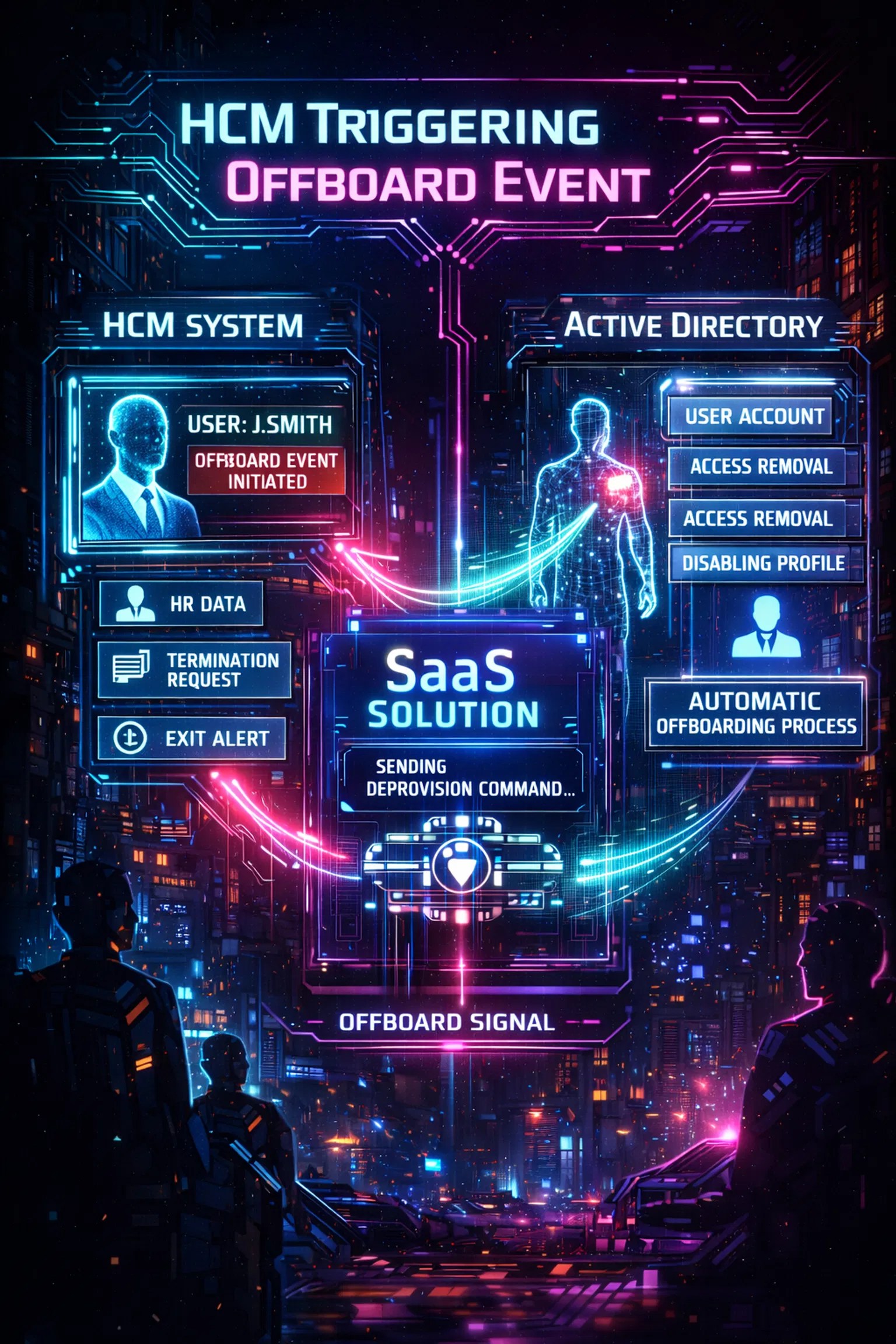
- The Trigger: A timestamped record from the HCM system (like Workday or Rippling) showing the official termination date.
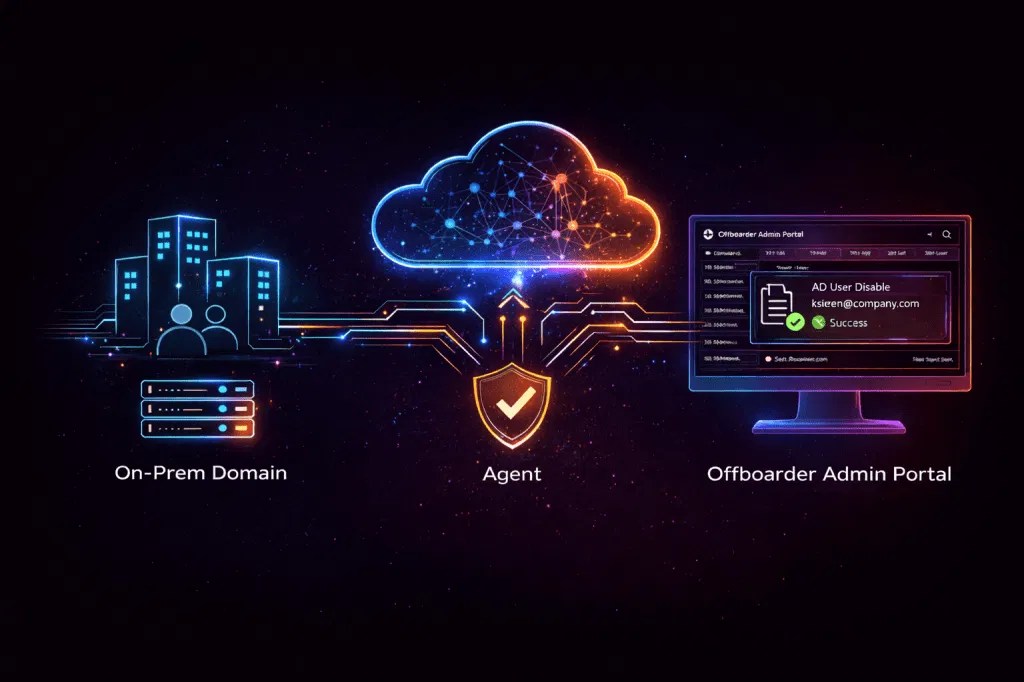
- The Action: Logs from the IAM system or individual SaaS tools showing the exact time access was revoked.
- The Verification: A system-generated report confirming that the user no longer appears in the active user list.
The platform used for offboarding should ideally automate this evidence collection. Manual screenshots are prone to human error and are difficult to manage at scale. Standardizing on automated user deprovisioning ensures that evidence is captured in real-time, creating a tamper-resistant audit trail.
Mistake #3: The Latency Trap (The 24-Hour Rule)
Timing is a critical metric for SOC 2 compliance. Most security policies state that access must be revoked "immediately" or "within 24 hours" of termination. However, the reality of manual communication often leads to delays.
The latency usually occurs in the handoff between HR and IT. If HR terminates an employee at 5:00 PM on a Friday but doesn't notify IT until Monday morning, a significant security window remains open. During this time, a disgruntled former employee could theoretically export sensitive data or disrupt operations.
Auditors compare termination dates in HR records with deactivation dates in system logs. Even a 48-hour delay can result in a "notation" or a "finding" in the SOC 2 report, which can alarm potential customers.
The solution is to remove the human element from the notification chain. By integrating HR systems directly with IAM workflows, the moment an employee's status changes in the HCM, the deprovisioning process should trigger automatically. This eliminates the communication gap and ensures compliance with the 24-hour window.
Mistake #4: Ignoring Contractors and Third Parties
SOC 2 controls do not distinguish between full-time employees and independent contractors. Both have access to the "System": the combination of people, processes, and technology that handles customer data.
Many organizations have a rigorous process for offboarding employees but an informal, decentralized process for contractors. Often, contractors are added to systems by individual department heads without IT’s involvement. When the contract ends, those accounts remain active indefinitely because they aren't tracked in the central HCM system.
These "orphaned accounts" are a prime target for attackers and a red flag for auditors. To mitigate this risk, all non-employee access must be managed through the same governance framework as employees. This includes:
- Standardizing the onboarding and offboarding of vendors.
- Conducting periodic access reviews to identify accounts with no recent activity.
- Using simple access removal tools to ensure that temporary access is revoked as soon as the project concludes.
Mistake #5: Informal Communication Channels
Relying on Slack messages, emails, or verbal requests to initiate offboarding is a major governance failure. Informal channels are not searchable, they are not auditable, and they are easily missed.
An auditor will ask to see the "source of truth" for a termination. If that source is a disorganized thread in a messaging app, the control is considered weak. A formal ticketing system or an automated platform is required to maintain a clear chain of custody for every access change.
Every offboarding event should follow a documented workflow. This consistency ensures that no application is forgotten and that every action is logged. Consistency turns a chaotic manual task into a repeatable business process.

The Cost of Compliance Failures
The consequences of failing a SOC 2 audit extend beyond the IT department. A qualified report: or a report with significant findings: can stall sales cycles, lead to legal liabilities, and damage the company’s reputation.
Operational risk is also at an all-time high. According to various cybersecurity reports, nearly a third of data breaches involve the use of compromised credentials, often from former employees or contractors whose access was never revoked. Offboarding is not just about passing an audit; it is about closing the most common entry point for cyber threats.
How to Remediate Your Offboarding Process
To move from a manual, high-risk process to a SOC 2-compliant model, organizations should implement the following technical controls:
- HR-Driven Automation: Connect the HCM system (the source of truth) to the IAM platform. When a termination date is entered by HR, the system should automatically schedule the revocation of access across all integrated tools.
- Full-Stack Revocation: Ensure the process covers not just SSO, but also GitHub, AWS, local databases, and any secondary SaaS applications.
- Automated Logging: The platform must generate a comprehensive report for every offboarding event. This report should be archived and ready for the auditor at a moment’s notice.
- Centralized Visibility: IT and Security teams need a single dashboard to view the status of all user accounts. This prevents "shadow IT" from creating hidden vulnerabilities.
By adopting these controls, the organization shifts the burden of proof from the individual to the system. Instead of scrambling to collect screenshots before an audit, the evidence is generated as a byproduct of the work itself.
Conclusion
SOC 2 offboarding requirements are designed to ensure that access is managed with precision and accountability. The common mistakes: relying on SSO alone, failing to capture evidence, and allowing timing gaps: are all symptoms of manual processes that cannot scale.
Automation is the only way to achieve the "zero-gap" offboarding that modern auditors demand. By integrating HR triggers with automated deprovisioning, companies can eliminate the risk of orphaned accounts, ensure 24-hour compliance, and maintain a state of continuous audit-readiness.
To see how the platform can streamline your compliance journey and eliminate manual offboarding errors, explore our overview of automated access removal. Consistent execution leads to a secure environment and a successful audit.
Leave a Reply