
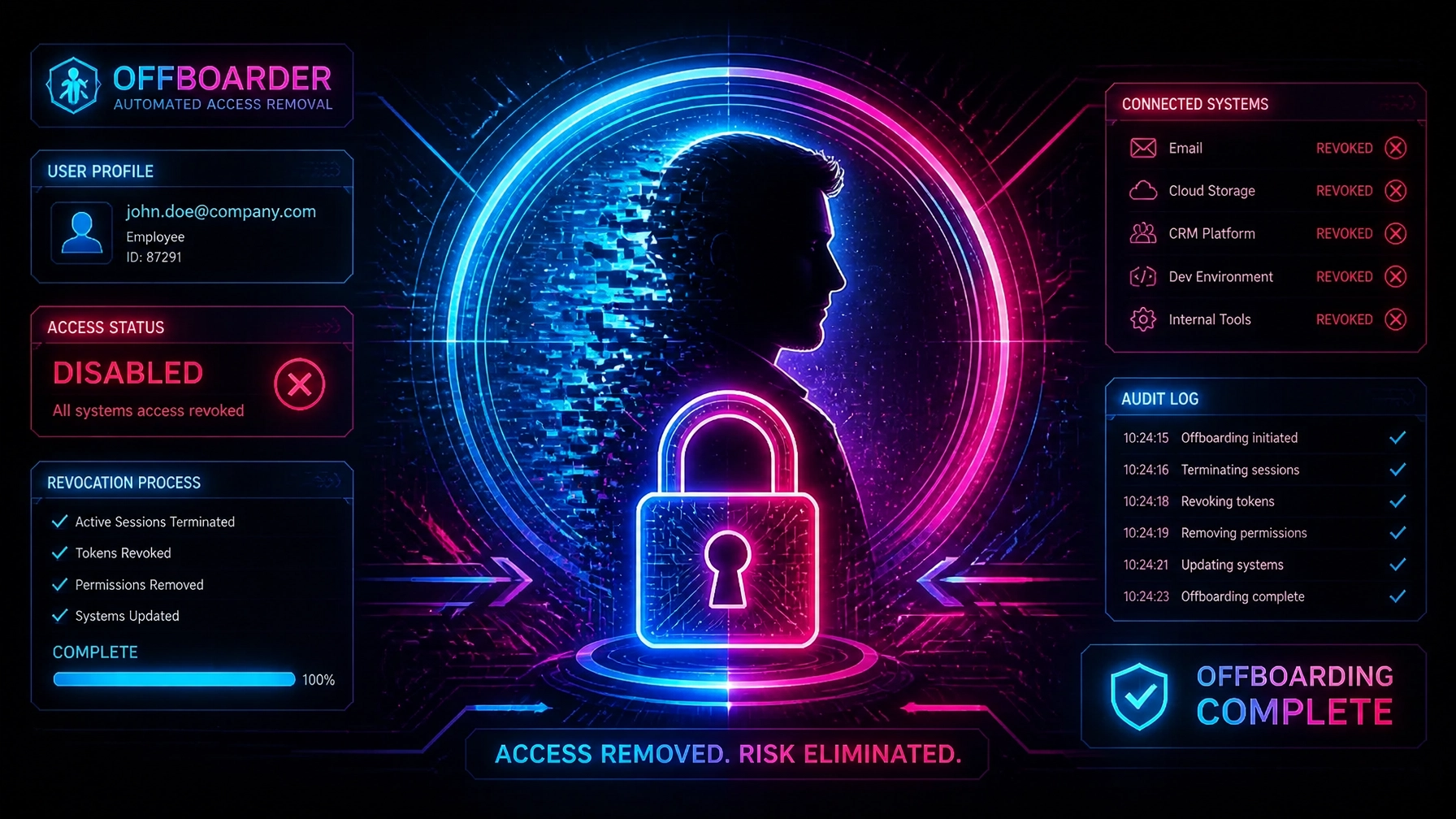
Security is often viewed as a series of walls, but the most significant vulnerabilities frequently exist in the doorways. When an employee or contractor leaves an organization, a critical "offboarding gap" emerges. This period: the time between an individual's departure and the actual revocation of their digital access: is a primary target for exploitation and a leading cause of compliance failure.
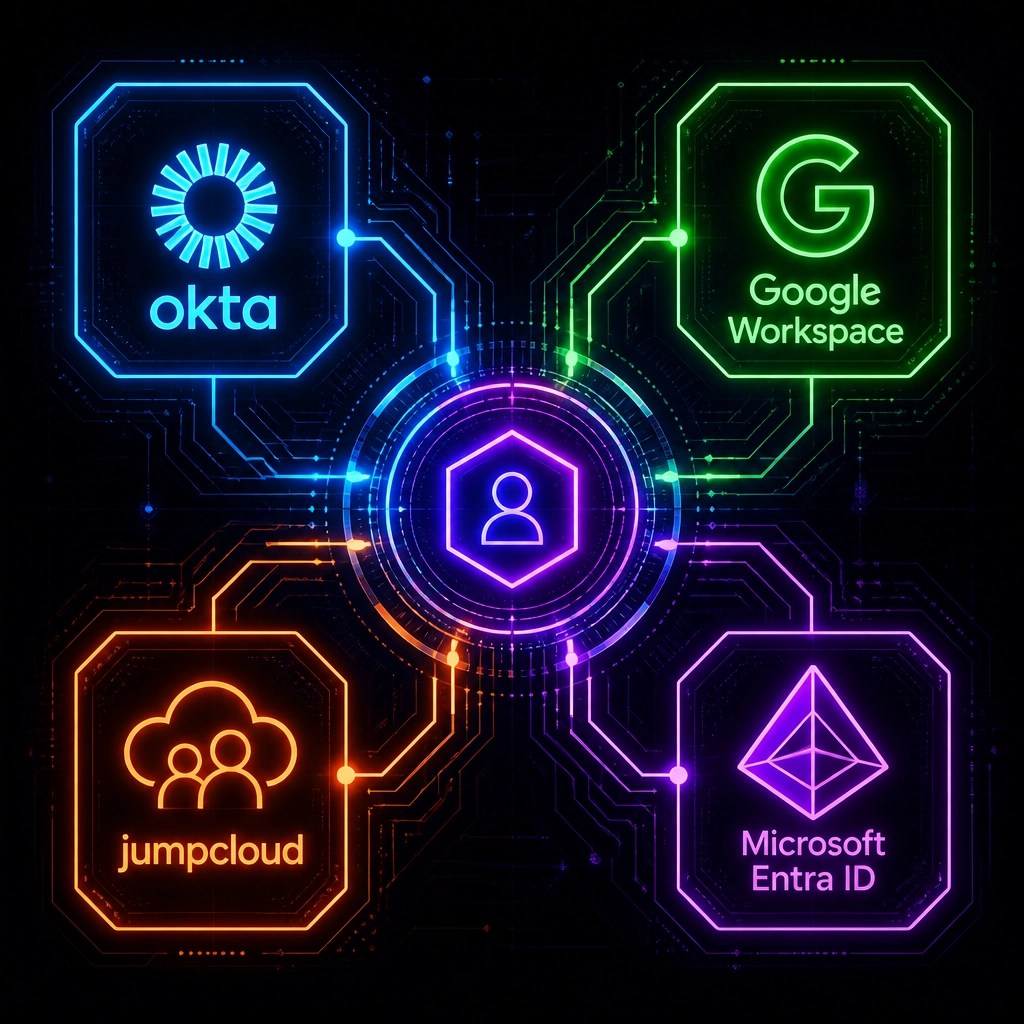
Manual offboarding processes are inherently brittle and prone to human error. Relying on IT tickets, spreadsheets, or the memory of administrators creates a decentralized system where access lingers long after it should have been terminated. To mitigate these risks, organizations must move toward a model of automated, HR-triggered access revocation across their primary identity providers, including Okta, Google Workspace, Jumpcloud, and Microsoft Entra ID.
The Invisible Threat: Orphaned Accounts
An orphaned account is any user profile that remains active in a system after the owner has left the company. These accounts represent a severe security control gap. They are invisible points of entry that can be leveraged for data exfiltration, lateral movement within a network, or the installation of persistent backdoors.
The risk is not merely theoretical; it is a common reality for lean teams managing complex technical debt. Without a centralized method to propagate a termination event across all domains, an administrator might disable a user in the primary directory but forget to revoke access to a specific SaaS application or a legacy on-premise system. Automated revocation ensures that a single trigger in the HR system cascades across the entire environment, closing every door simultaneously.
The Compliance Mandate: SOC 2 and ISO 27001
For modern organizations, security is inseparable from compliance. Frameworks like SOC 2 and ISO 27001 place a heavy emphasis on logical access control and the timely removal of user rights. Auditors do not just look for a policy that states access is removed; they require objective evidence that the policy is consistently executed.
- SOC 2 (Common Criteria 6.2 & 6.3): Requires organizations to demonstrate that access is revoked upon termination or transfer.
- ISO 27001 (Annex A.6.3 & A.6.5): Mandates a formal process for access deprovisioning and records to prove compliance.
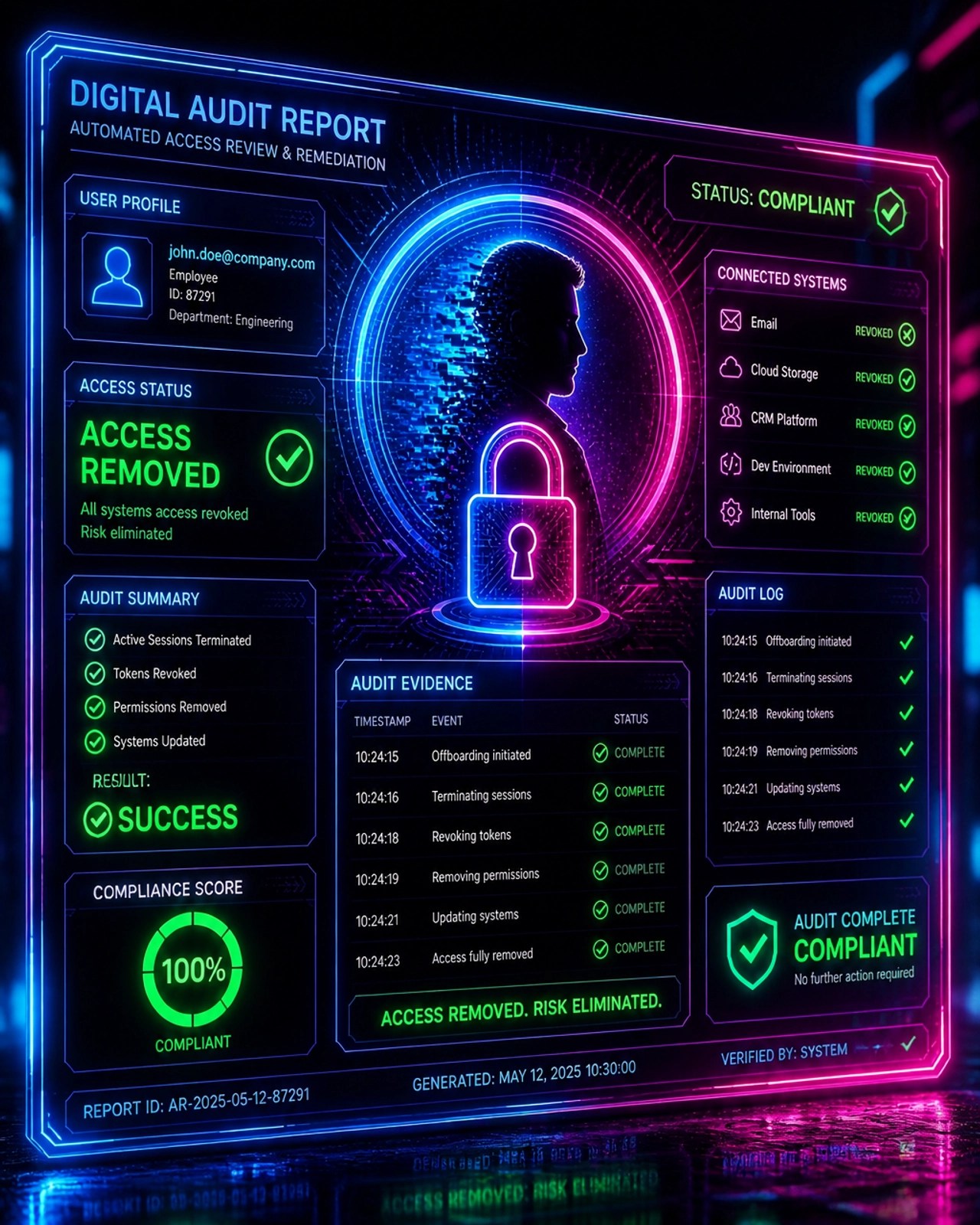
Failing to provide this proof leads to audit findings that can jeopardize customer trust and legal standing. Offboarder's platform is designed to provide this audit-ready evidence automatically. By capturing every step of the revocation process, the platform turns activity into accountability.
Integrating the Modern Identity Stack
Most organizations rely on a combination of identity providers (IdPs) to manage their workforce. Each system has its own nuances, but all require rigorous management during the offboarding lifecycle. Offboarder has expanded its capabilities to include native connectors for the industry's most critical platforms.
Okta and Entra ID (Azure AD)
Okta and Microsoft Entra ID often serve as the central hub for Single Sign-On (SSO) across hundreds of SaaS applications. If an account remains active in these systems, the user potentially maintains access to every connected tool. Offboarder integrates directly with these IdPs to disable accounts and revoke active sessions the moment a termination is logged in the HR system.
Google Workspace
Google Workspace is more than an email provider; it is a repository for sensitive corporate data stored in Drive and Calendar. Automated offboarding must include the immediate suspension of the Google account to prevent unauthorized data access. The platform ensures that Google Workspace access is terminated in sync with other core systems.
Jumpcloud
For organizations utilizing Jumpcloud for directory services and device management, the stakes include the security of the physical endpoints themselves. Offboarder's Jumpcloud connector allows for the automated locking of local OS accounts and removal from security groups, ensuring that a departed contractor cannot access corporate resources from their machine.

The Failure of Manual Handoffs
The traditional offboarding workflow involves HR notifying IT, who then manually logs into various consoles to disable accounts. This manual handoff is the point of greatest failure. Delays are inevitable, and the lack of a standardized process means that critical systems are often missed.
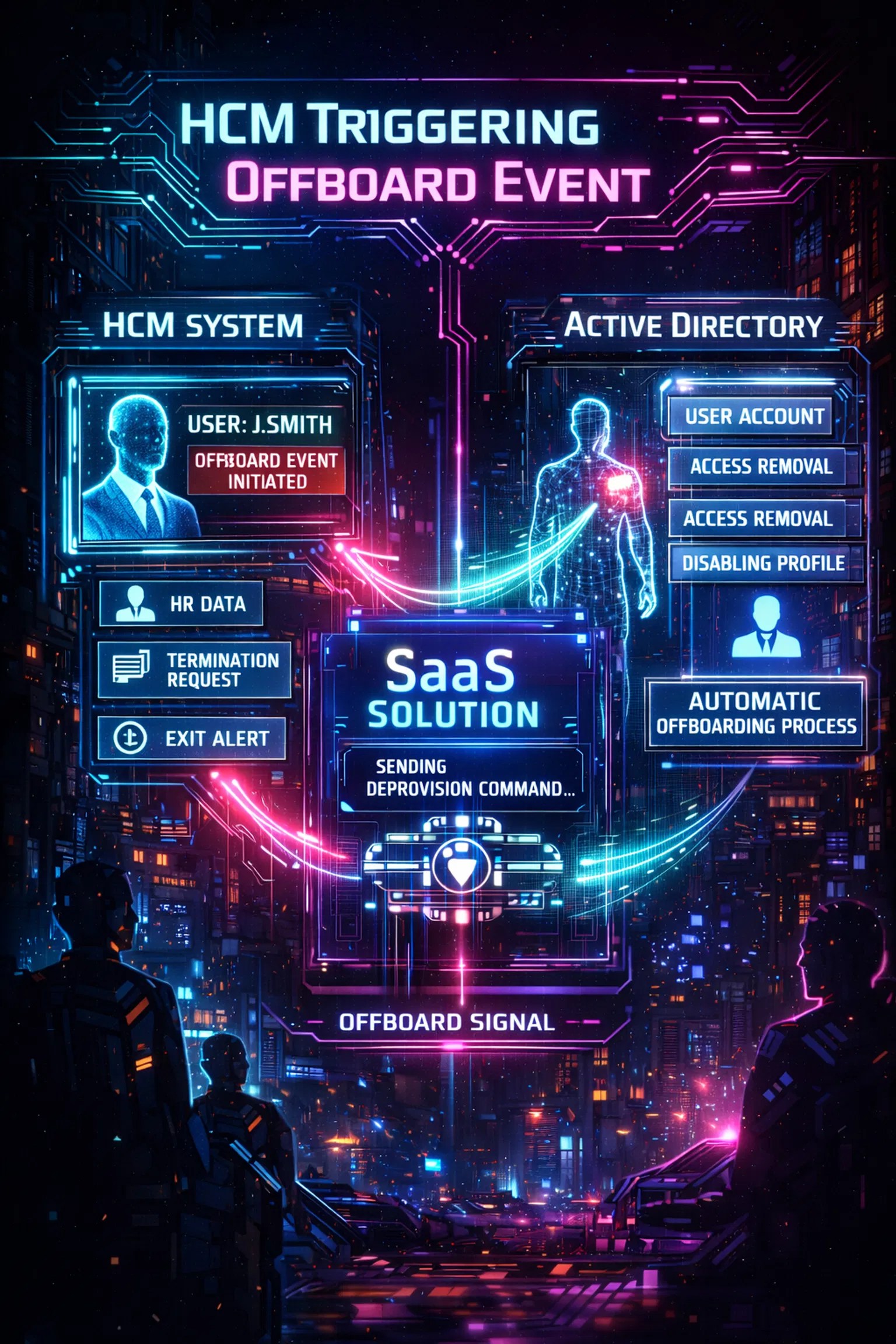
The platform eliminates these manual steps by positioning HR as the authoritative trigger. When a status change occurs in the Human Capital Management (HCM) system, the service automatically initiates the deprovisioning sequence. This transition from a human-driven process to a software-driven one reduces operational risk and frees IT teams from repetitive, low-value tasks.
- Consistency: Every offboarding event follows the same predefined workflow.
- Speed: Access is revoked in minutes, not days.
- Accuracy: Identity matching ensures the right accounts are removed across multiple domains.
Building a Tamper-Resistant Audit Trail
In the event of a security incident or an annual audit, "we think we removed access" is an insufficient answer. Governance requires proof. The platform generates a comprehensive record of every action taken during the offboarding process.
This evidence capture includes timestamps, system responses, and confirmation of success for each connected system, whether it is Okta, Google Workspace, or an on-premise Active Directory. By centralizing these logs, the service provides a single source of truth that is resistant to tampering and ready for immediate review by internal or external auditors.
Bridging the On-Premise and Cloud Divide
Many organizations struggle with a hybrid environment where some systems are in the cloud and others remain on-premise. This fragmentation often leads to inconsistent security postures. Offboarder addresses this through a lightweight on-prem agent that bridges the gap between cloud-native IdPs and legacy infrastructure.
This agent allows the platform to reach into local domains to disable Active Directory users or revoke access to internal databases, all while being controlled from a central, cloud-based portal. This multi-domain support ensures that no corner of the organization is left vulnerable when an employee departs.
Conclusion: Standardization as the Standard
Security is not a static state but a continuous process of reducing attack surfaces. Automated access revocation is no longer an optional luxury for high-growth companies; it is a fundamental requirement for maintaining a secure and compliant environment.
By integrating with Okta, Google Workspace, Jumpcloud, and Entra ID, Offboarder provides a standardized path for managing the entire offboarding lifecycle. This approach replaces the uncertainty of manual processes with the reliability of automation, ensuring that every departure is handled with the same level of precision and rigor. Strengthening these controls is the most effective way to turn potential vulnerabilities into documented security strengths.
For more information on how to streamline your access management, visit our security and compliance page.
Leave a Reply