
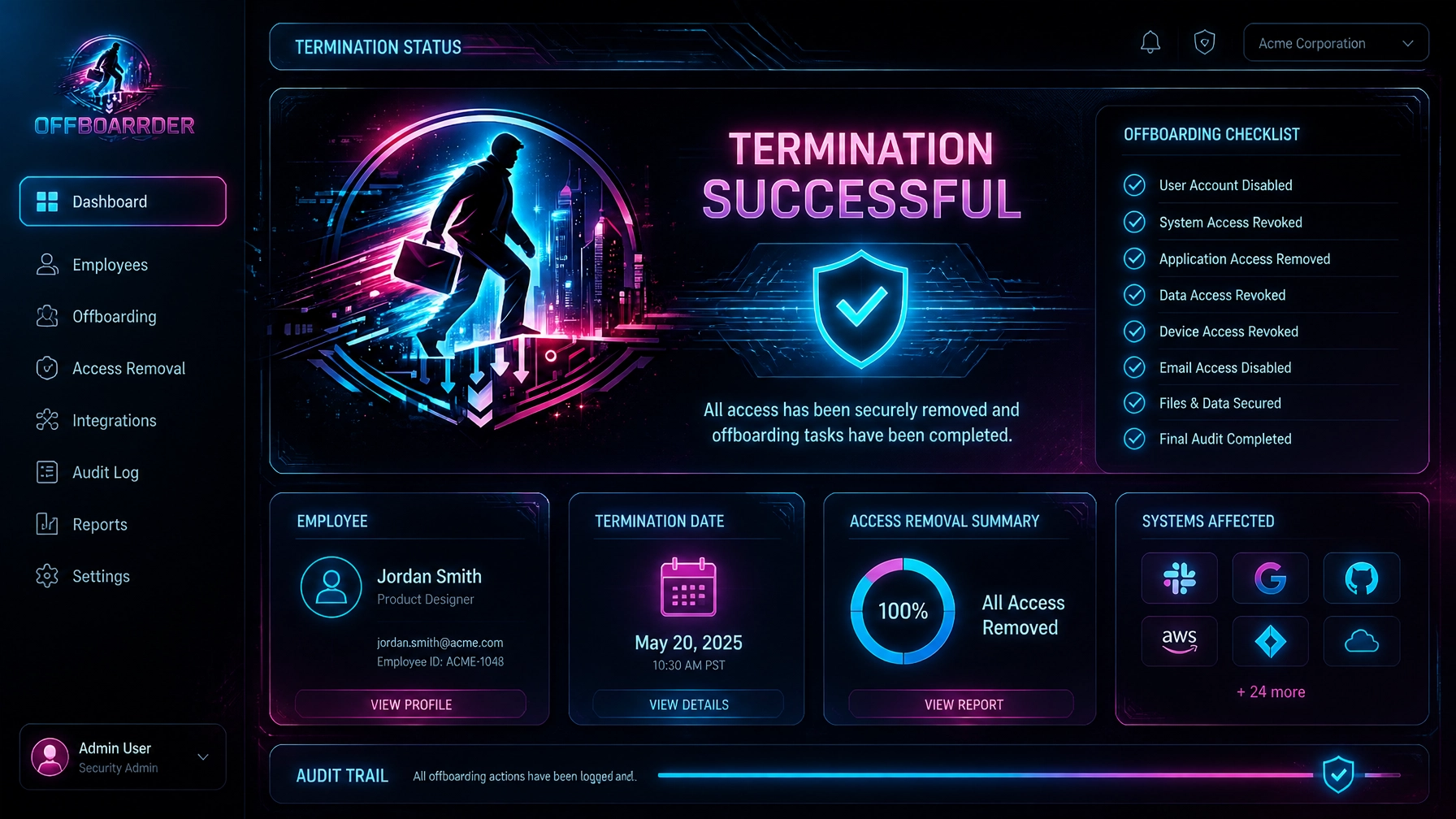
Logical access control is the cornerstone of cybersecurity compliance, yet it remains one of the most frequent points of failure during ISO 27001 and SOC 2 audits. For many organizations, the process of removing a terminated employee's access is a fragmented sequence of manual tasks, spreadsheets, and hope. When these controls fail, the result is more than just a "control gap": it is a direct invitation for insider threats and regulatory non-compliance.
Securing the digital perimeter requires more than a policy on paper. It requires a technical enforcement mechanism that leaves no room for human error. If your current offboarding process relies on an IT ticket that sits in a queue for 48 hours, your logical access control is already broken.
Here are the top 10 reasons offboarding controls fail and the specific technical resolutions required to fix them.
1. Latency in Access Revocation
The most common audit finding is the "termination sample" where access was not revoked within the required 24-hour window. Manual processes are inherently slow, often delayed by weekends, holidays, or simple oversight. Every hour a terminated employee retains access represents a significant operational risk and a compliance violation.
The Fix: Implement an automated offboarding solution that triggers the moment a termination is recorded. The platform should ensure that "day one" deactivation is the standard, not the goal. Speed is the primary metric for successful logical access control.
2. Reliance on Manual Checklists
Checklists are not controls; they are suggestions. Even the most diligent IT professional can miss a checkbox on a manual list when managing dozens of systems. Manual handoffs between HR and IT are the primary source of process leaks that auditors quickly identify during population testing.
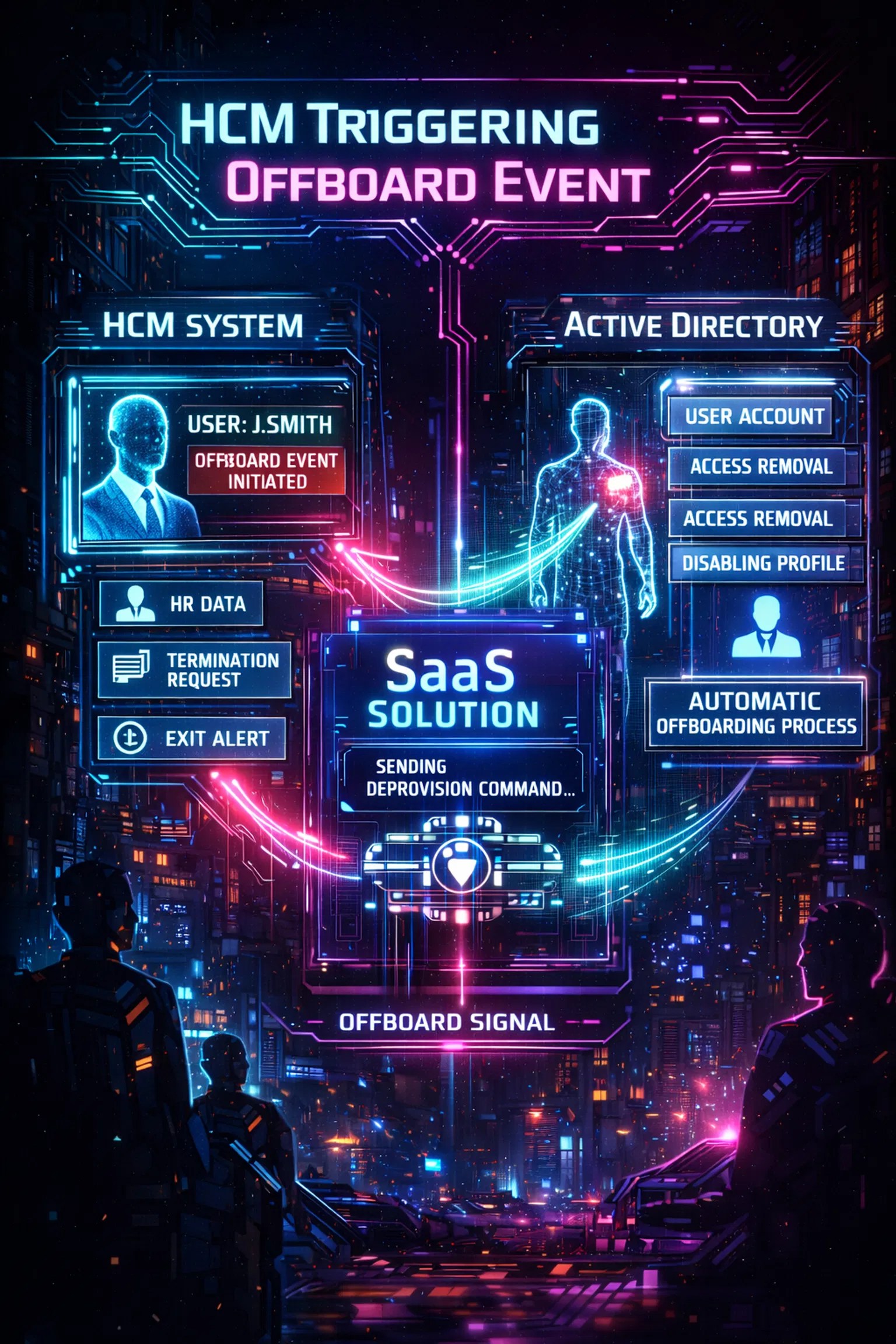
The Fix: Remove the human element from the execution phase. Use an HR-as-the-authoritative-trigger approach where the Human Capital Management (HCM) system automatically initiates deprovisioning. This eliminates the need for manual tickets and ensures every system is addressed every time.
3. The "Orphaned Account" Problem
It is common for organizations to disable an employee's primary Identity Provider (IdP) account but forget secondary accounts, local logins, or third-party SaaS applications. These "ghost accounts" remain active, often with privileged access, long after the employee has departed.
The Fix: Offboarding must extend beyond the core IdP. The service should provide comprehensive coverage across multiple domains and standalone systems. Identifying and neutralizing these orphaned accounts is essential for maintaining a tamper-resistant security posture.
4. Multi-Domain Complexity and Identity Mismatch
Large organizations often struggle with different username conventions across various Active Directory (AD) domains. When an employee is "jsmith" in one domain and "john.smith" in another, automated scripts often fail to find and disable both. This inconsistency leads to partial offboarding and significant security gaps.
The Fix: Utilize flexible identity matching that can correlate users across disparate systems regardless of naming conventions. The platform must be able to resolve these identity conflicts to ensure complete termination across the entire enterprise architecture.
5. Lack of Audit-Ready Evidence
Even if your IT team is perfect at revoking access, you will fail an audit if you cannot prove it. Auditors require timestamped, tamper-resistant evidence that shows exactly when access was removed and by whom. Pulling logs from ten different systems manually is a resource-heavy task that often yields incomplete results.
The Fix: Choose a solution that generates audit-ready evidence automatically. Every termination should produce a compliance artifact that maps directly to ISO 27001 or SOC 2 requirements. Turning activity into accountability requires centralized, exportable logging.
6. Disconnect Between HR and IT
In many companies, HR and IT operate in silos. IT may not find out about a termination until days after it has occurred, or worse, they may not be notified of a "silent" departure at all. This communication gap is where most logical access control failures begin.
The Fix: Integrate the IAM stack directly with the HR platform. When HR marks an employee as terminated, the platform must receive a secure signal to begin the deprovisioning process immediately. This synchronization ensures that the technical state of access always matches the employment state.

7. Privilege Drift and the "Mover" Issue
Logical access control is not just about leaving; it is about moving. When employees change roles, they often retain their old permissions while gaining new ones. Over time, this results in excessive privileges that violate the principle of least privilege and increase the blast radius of a compromised account.
The Fix: Offboarding workflows should be adaptable to "movers" as well as "leavers." Implementing a standardized lifecycle management process ensures that access is consistently reviewed and revoked when it is no longer necessary for the current job function.
8. Overlooking Service Accounts and Shared Credentials
When an individual departs, they may leave behind shared credentials or service accounts they managed. If these are not rotated or disabled, the risk persists. Auditors view shared accounts as a high-risk design flaw because they defeat individual accountability.
The Fix: The offboarding process should include a review of any shared or generic credentials associated with the departing user. The platform must help transition these responsibilities or disable access to ensure no "backdoors" remain open after the individual leaves.
9. Failure to Cover Remote and Cloud Assets
Modern work environments rely on a mix of on-premises AD and cloud-based SaaS. Many offboarding processes only focus on one or the other, leaving a significant portion of the attack surface exposed. Managing access in a hybrid environment requires a unified approach.
The Fix: Deploy a cloud-native architecture with a lightweight on-prem agent. This allows the platform to bridge the gap between local domains and cloud services, providing a single pane of glass for all termination actions. Consistency across environments is a mandatory requirement for modern governance.
10. Lack of Verification and Reconciliation
Many organizations "fire and forget" their offboarding commands. They send the signal to disable an account but never verify if the action was successful. If an API call fails or a network issue occurs, the account stays active, and the organization remains unaware of the failure.
The Fix: Closing the loop is critical. The service must not only send the deactivation command but also verify that the account state has changed. A successful offboarding lifecycle must include a confirmation step and a proactive alert system for any failed actions.
Conclusion: From Manual Handoffs to Automated Assurance
Logical access control is a high-stakes component of organizational governance. Relying on manual, ad-hoc processes is no longer a viable strategy for organizations facing modern security threats and stringent compliance mandates.
By automating the offboarding lifecycle, companies can eliminate human error, reduce operational risk, and provide auditors with the definitive proof they require. Moving from a reactive, ticket-based system to a proactive, HR-triggered platform is the only way to ensure that termination of access is fast, safe, and complete.
Standardizing the offboarding lifecycle helps turn a complex IT burden into a streamlined, compliant business process.
For organizations ready to close their control gaps, scheduling a pilot is the first step toward achieving audit-ready logical access control.
Leave a Reply