

Sarbanes-Oxley (SOX) compliance hinges on the integrity of financial data. For IT and security teams, this translates into a rigorous focus on IT General Controls (ITGCs), specifically logical access. When an employee leaves the organization, the risk of unauthorized access to financial systems becomes a primary concern for auditors. Failure to revoke access promptly and provide evidence of that removal often leads to significant audit findings or material weaknesses.
Manual processes frequently fail under the pressure of scale and complexity. Organizations must move beyond ad-hoc checklists toward a standardized, automated approach to identity and access management (IAM). This ensures that every termination is executed with precision and tracked with immutable evidence.
Here are 10 critical things you should know about offboarding and SOX logical access for your next audit.
1. The 24-Hour SLA is a Non-Negotiable Standard
Problem: Many organizations rely on IT help desk tickets that may sit in a queue for days. Auditors view any delay between an employee's departure and their account deactivation as a "control gap."
Solution: Establish a strict Service Level Agreement (SLA) for access revocation, typically within 24 hours of termination. Automating the trigger from the HR system ensures that the clock starts immediately, removing human delay from the equation.
Value: Standardizing the timeframe for revocation minimizes the window of opportunity for unauthorized access and demonstrates operational discipline.
2. HR Must Be the Authoritative Trigger
Problem: Communication silos between HR and IT often result in "ghost accounts" where employees remain active in systems weeks after their last day. If IT only acts when they receive a manual email, the process is inherently flawed.
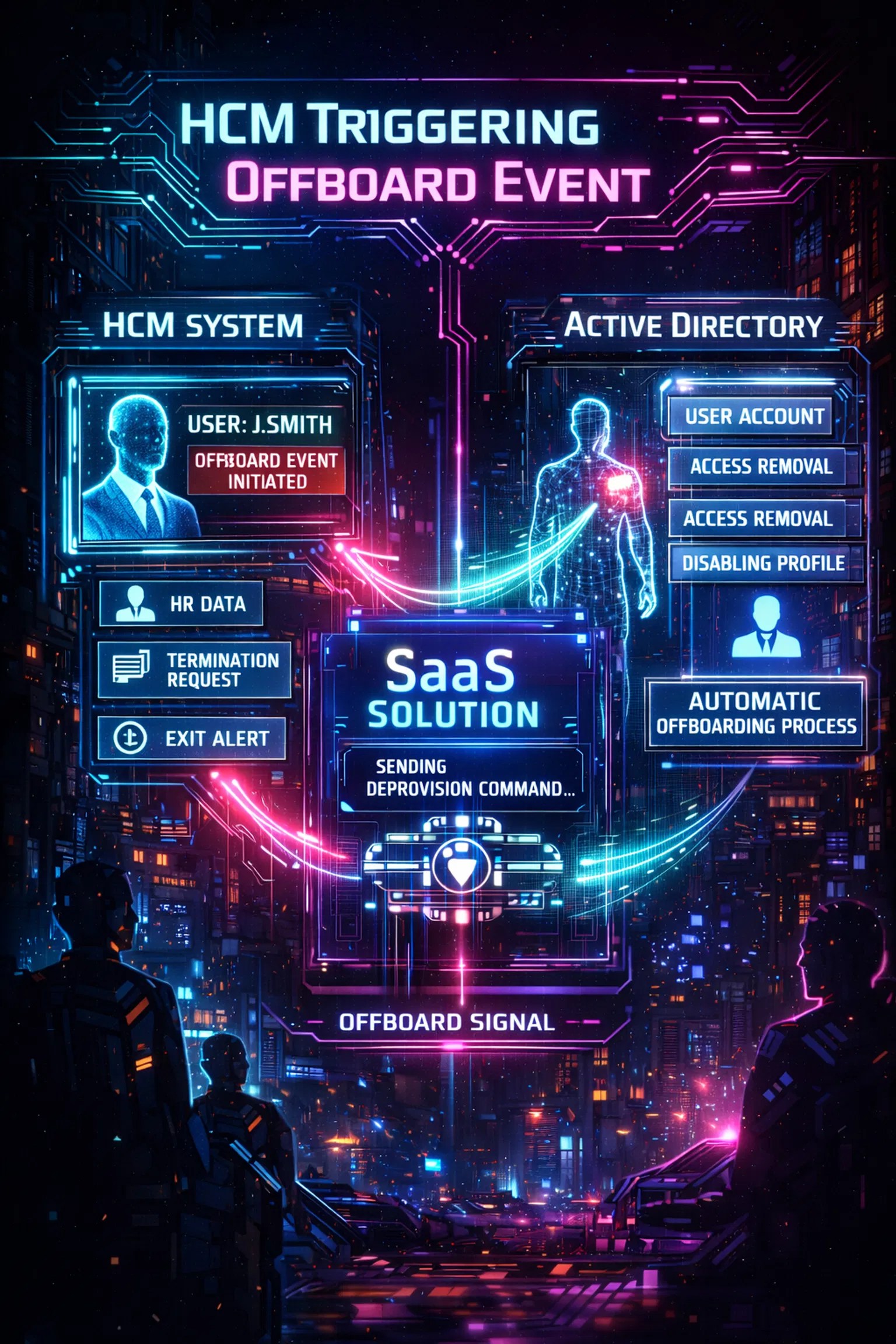
Solution: Implement HR-triggered offboarding. When a termination status is updated in the Human Capital Management (HCM) platform, the IAM system should automatically initiate the deprovisioning workflow.
Value: Aligning IT actions with HR data ensures that the authoritative source of truth drives security outcomes.
3. Evidence of Removal Trumps a "Closed Ticket"
Problem: A ticket marked as "Complete" in Jira or ServiceNow is often insufficient for SOX auditors. They require proof that the account was actually disabled in the target system, such as Active Directory or an ERP.
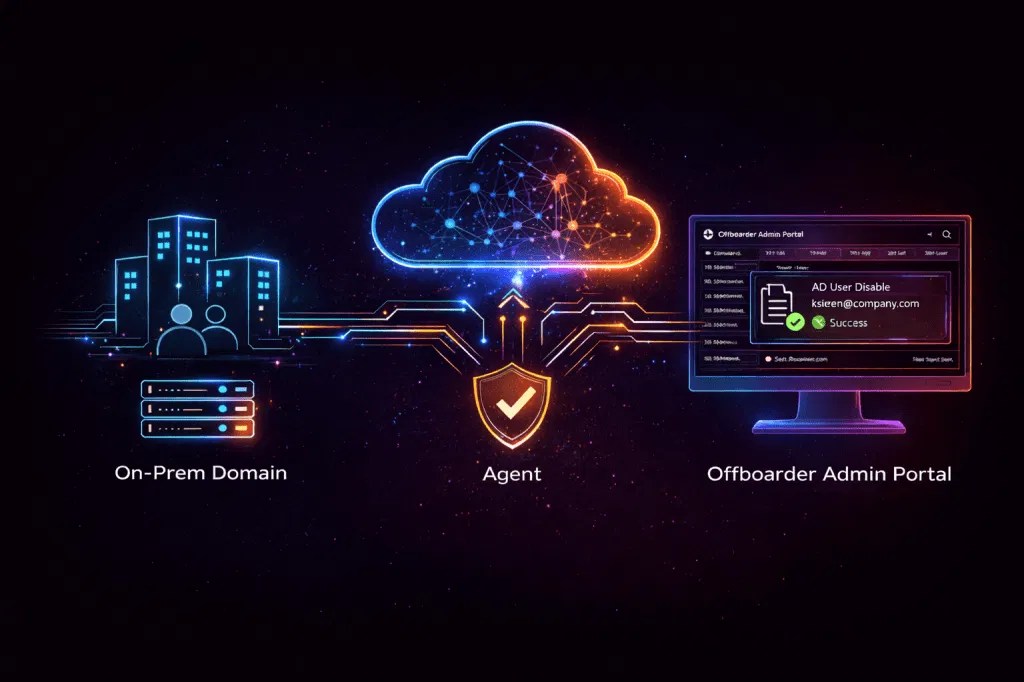
Solution: The platform should capture and store system logs that show the exact timestamp and success confirmation of the deactivation. This evidence must be exportable and tamper-resistant.
Value: Definitive proof of execution turns a manual verification task into an automated audit-ready asset.
4. Multi-Domain Complexity Requires Flexible Identity Matching
Problem: Larger enterprises often manage multiple Active Directory domains with varying naming conventions. Matching a "John Doe" in HR to "jdoe" in Domain A and "john.doe" in Domain B is a common source of error.
Solution: Use a solution that offers flexible identity matching. This allows the system to correlate diverse account IDs back to a single human identity, ensuring that all linked accounts are deactivated simultaneously.
Value: Comprehensive identity correlation prevents orphaned accounts from remaining active in overlooked domains.
5. Privileged Access is a High-Stakes Target
Problem: Standard user accounts are important, but accounts with administrative or "super-user" privileges pose the greatest risk to financial integrity. Auditors will specifically sample these accounts during a SOX review.
Solution: Your offboarding process must specifically identify and prioritize the removal of privileged access. Automated workflows should extend beyond standard SSO groups to include local admin rights and specialized database roles.
Value: Fast-tracking the removal of high-level permissions significantly reduces the organization’s attack surface.
6. Consistency Across All In-Scope Systems
Problem: Offboarding often focus on primary systems like email, while neglecting secondary financial applications or data warehouses. This inconsistent coverage creates "pockets of risk."
Solution: Identify every system that is "in-scope" for SOX and ensure the offboarding workflow covers each one. Whether it is a cloud-based ERP or an on-premise legacy database, the process must be uniform.
Value: Uniformity in control execution ensures that no system is left vulnerable due to procedural oversight.
7. The Risks of Manual "Checklist" Fatigue
Problem: Lean IT teams managing manual offboarding checklists are prone to human error. A single missed step on a 20-item checklist can result in a failed audit sample.
Solution: Replace manual intervention with automated orchestration. Manual AD checklists are inherently less secure than automated systems that follow a coded, repeatable path every time.
Value: Automation eliminates the variability of human performance, providing a predictable and reliable control environment.
8. Periodic Access Reviews Catch What Offboarding Misses
Problem: Even the best offboarding processes can have exceptions, such as contractors with unusual contract terms or "shadow IT" applications not integrated into the main workflow.
Solution: Supplement offboarding with periodic user access reviews (UARs). Quarterly reviews of all active accounts in financial systems help identify and remediate any accounts that should have been closed.
Value: Layered controls provide a "safety net" that ensures the long-term hygiene of the access environment.
9. Immutable Audit Logs for Accountability
Problem: Auditors need to know not just that an account was disabled, but who or what triggered the action and when. Ad-hoc logs that can be edited or deleted are a major red flag.
Solution: Maintain a centralized, immutable audit log within your offboarding platform. This log should record every step of the deprovisioning lifecycle, from the HR trigger to the final system confirmation.
Value: Robust logging transforms activity into accountability, making it easy to reconstruct events during an audit.
10. Scalability is a Security Requirement
Problem: A process that works for 10 terminations a month will likely break when the organization scales to 100 or 1,000. Scaling a manual process usually means hiring more people, which increases costs and the potential for error.
Solution: Implement a cloud-native modern architecture that can handle high-volume offboarding without additional administrative overhead. A lightweight agent can bridge the gap between cloud triggers and on-prem systems.

Value: Scalable solutions allow the business to grow while maintaining a consistent and strong security posture.
Building an Audit-Ready Future
SOX compliance is not a "once-a-year" event; it is a continuous commitment to control and oversight. Logical access remains one of the most scrutinized areas because it represents the primary gateway to sensitive data. Organizations that rely on manual handoffs and fragmented systems are at a disadvantage when facing modern audit requirements.
By standardizing the offboarding lifecycle through automation, companies can ensure that every employee departure is handled with the speed and precision that security demands. Moving the trigger to HR, ensuring multi-domain coverage, and capturing immutable evidence are the hallmarks of a mature GRC program.
Ultimately, the goal of offboarding is to turn a complex, multi-team process into a "set-and-forget" workflow. When your next SOX audit arrives, having a centralized repository of proof will transform a stressful review into a routine demonstration of excellence.
For more information on how to strengthen your logical access controls, explore the security and compliance features of the Offboarder platform.
Leave a Reply