

Mid-market organizations face a unique paradox in the modern cybersecurity landscape. They are expected to maintain the same rigorous compliance standards as global enterprises: such as SOC 2, ISO 27001, and SOX: but often lack the massive IT budgets and dedicated security teams required to manage complex identity ecosystems. This discrepancy creates a significant control gap, particularly during the employee departure process.
Selecting the best IAM tools is no longer just about Single Sign-On (SSO) or Multi-Factor Authentication (MFA). It is about establishing a robust, audit-ready framework that ensures every digital footprint is erased when an employee leaves the company. Without a focused strategy, organizations risk "orphaned accounts," where former employees retain access to sensitive data weeks or even months after their termination date.
This guide evaluates the landscape of identity management to help you find an affordable IAM solution that prioritizes security, automation, and compliance.
Identifying the Best IAM Tools for Compliance
When evaluating identity and access management solutions, the priority must be risk mitigation rather than just user convenience. For mid-market companies, the "best" tool is one that integrates seamlessly with existing directories and provides tamper-resistant logs for auditors.

A compliant IAM strategy requires three core pillars:
- Centralized Identity Governance: A single source of truth for all user permissions.
- Enforced Least Privilege: Ensuring users only have access to what they need for their current role.
- Automated Lifecycle Management: The ability to handle the "Joiner-Mover-Leaver" process without manual intervention.
Most platforms excel at the "Joiner" phase: onboarding is a productivity booster that every department wants. However, the "Leaver" phase is where security risks escalate. A failure in employee termination access removal is a primary cause of audit findings. The best IAM tools in 2026 are those that move beyond simple login management and into deep, system-level deprovisioning.
The Search for an Affordable IAM Solution
Mid-market leaders often search for an affordable IAM solution only to find that "affordable" often translates to "incomplete." Many entry-level tools provide SSO but stop short of managing the deep-level access required for full compliance.
For example, a basic SSO provider might revoke access to the dashboard, but the underlying Active Directory (AD) account remains enabled. This creates a "shadow access" problem. To achieve true compliance, organizations must look for solutions that offer:
- HR-Triggered Workflows: The process should start in the Human Capital Management (HCM) system, not a helpdesk ticket.
- Multi-Domain Support: The ability to reach into various on-prem and cloud directories simultaneously.
- Low Operational Overhead: The solution should be "set it and forget it," requiring minimal maintenance from lean IT teams.
Lowering costs by choosing a tool that requires manual intervention is a false economy. The labor hours spent on manual checklists and the potential fines from a compliance failure far outweigh the subscription cost of a specialized employee offboarding software.
Solving for Employee Termination Access Removal
The moment an employee is terminated, a race begins. Security protocols dictate that access should be revoked immediately, yet manual processes often take 24 to 72 hours. This delay is an unacceptable risk for organizations in regulated industries like FinTech, Healthcare, or Education.
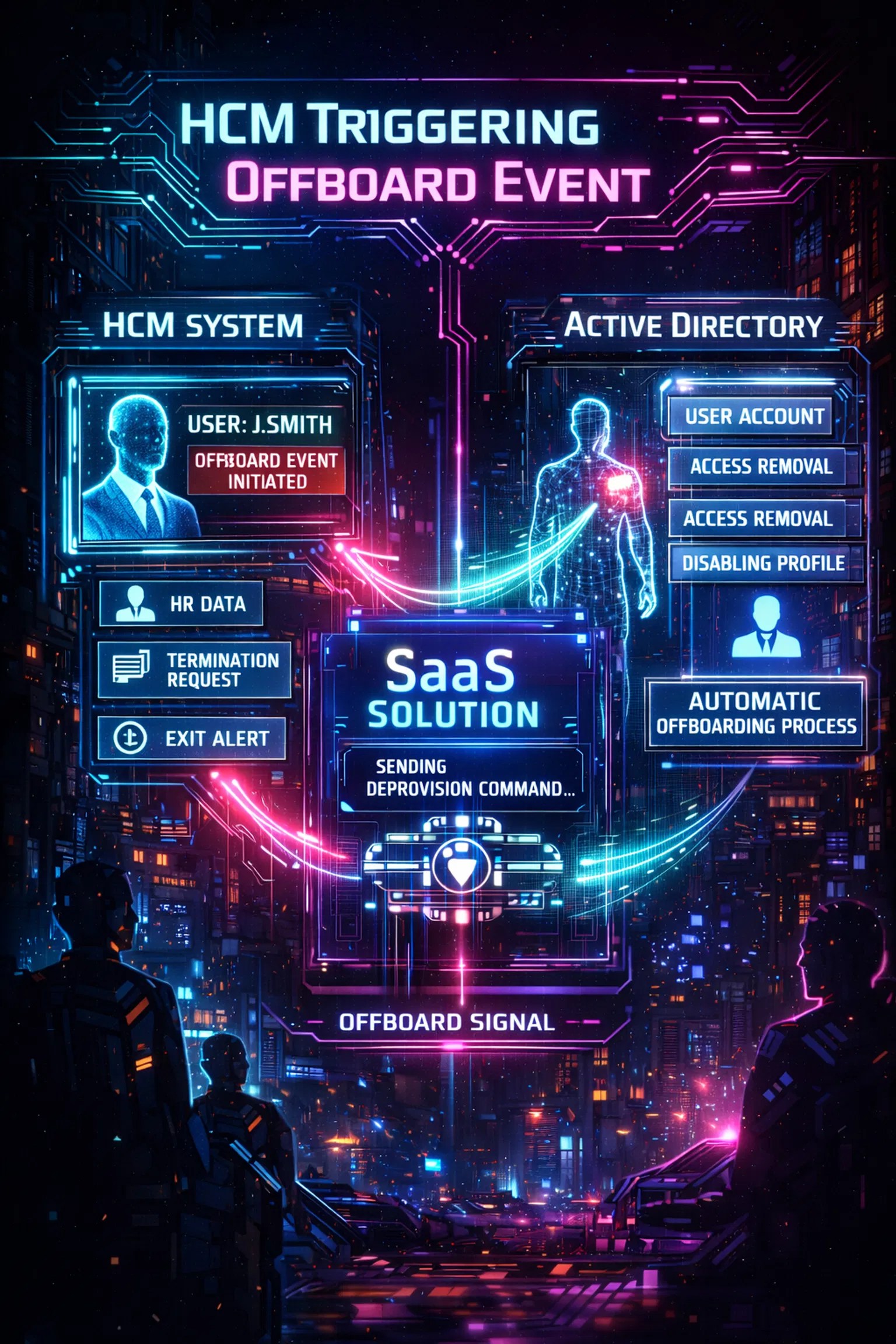
Effective employee termination access removal must be:
- Instantaneous: Triggered the second the HR status changes.
- Comprehensive: Disabling accounts in AD, Entra ID, Google Workspace, and proprietary systems.
- Documented: Every action must be captured in an audit-ready format to provide "proof of removal."
The Offboarder platform addresses this specific challenge by acting as the bridge between HR and IT. By automating what is traditionally a multi-team handoff, it eliminates human error and ensures that no account is ever missed. This level of consistency is exactly what auditors look for when reviewing logical access controls.
Comparative Analysis: Top IAM Vendors for Mid-Market
| Feature | Microsoft Entra ID | Okta Workforce | miniOrange | Offboarder |
|---|---|---|---|---|
| Best For | Microsoft-centric shops | Large, diverse SaaS stacks | Cost-sensitive SMBs | Deep, automated offboarding |
| HR Integration | Strong (via Graph/Connect) | Advanced (Lifecycle Mgmt) | Basic | Authoritative Trigger |
| AD Support | Native/Hybrid | Requires Agents | Basic | Multi-Domain Native |
| Audit Evidence | Log-heavy, manual export | Comprehensive Reports | Basic | Instant Audit Artifacts |
| Cost Profile | Included in M365 (partially) | High (SCIM Tax) | Low | Affordable/Value-driven |
While Microsoft Entra ID and Okta are industry leaders, they often require significant configuration or expensive "add-on" modules to handle complex offboarding scenarios. Mid-market companies frequently find themselves paying for features they don't use just to get the few they need. In contrast, specialized employee offboarding software focuses entirely on the "Leaver" problem, providing a more surgical and cost-effective approach to compliance.
Bridging the Control Gap with Offboarder
The primary weakness in standard IAM tools is the lack of "deep" deprovisioning. Many tools send a signal to an application to disable a user, but they cannot verify if that signal was successfully processed or if the user's local directory account was locked down.

Offboarder fills this control gap by providing:
- Flexible Identity Matching: Identifying the correct user across disparate systems, even when naming conventions (like
jdoevsjohn.doe) don't match. - Evidence Capture: Generating clear, exportable evidence for SOC 2 or ISO 27001 that shows exactly when access was revoked.
- Tamper-Resistant Logging: Ensuring that the trail of removal cannot be altered, which is a critical requirement for SOX logical access compliance.
For a mid-market organization, these features turn a complex, high-risk process into a standardized operational task. The platform allows IT managers to move from a reactive posture to a proactive one. Instead of hunting for orphaned accounts during an audit, you can present a clean history of automated removals.
Standardizing the Offboarding Lifecycle
Consistency is the cornerstone of security governance. When offboarding is handled via email chains or manual spreadsheets, the risk of a "missed step" is nearly 100% over time. Standardizing the lifecycle means that every employee: regardless of their role or location: is processed with the same level of scrutiny.

This standardization is why HR-triggered offboarding is becoming the industry standard. By making HR the authoritative source, you ensure that as soon as a termination is recorded in the payroll or HCM system, the security infrastructure responds.
Organizations should view their IAM stack not just as a set of tools, but as a defense-in-depth strategy. While an SSO provider handles the front door, a dedicated employee offboarding software like Offboarder secures the back door, ensuring that once a person leaves the organization, they stay out.
Summary: From Activity to Accountability
Choosing the best IAM tools for the mid-market requires a balance of functionality, cost, and compliance-readiness. While broad platforms offer a wide range of features, they often leave critical gaps in the termination process.
To secure your organization and satisfy auditors, you must:
- Prioritize employee termination access removal as a high-stakes security event.
- Seek an affordable IAM solution that automates deep-level deprovisioning rather than just surface-level SSO.
- Implement automated workflows that generate the evidence required for modern compliance frameworks.
Strong logging and automated deprovisioning help turn administrative activity into organizational accountability. By standardizing the offboarding lifecycle, you reduce operational risk and build a foundation of trust that will withstand any audit.
Leave a Reply