
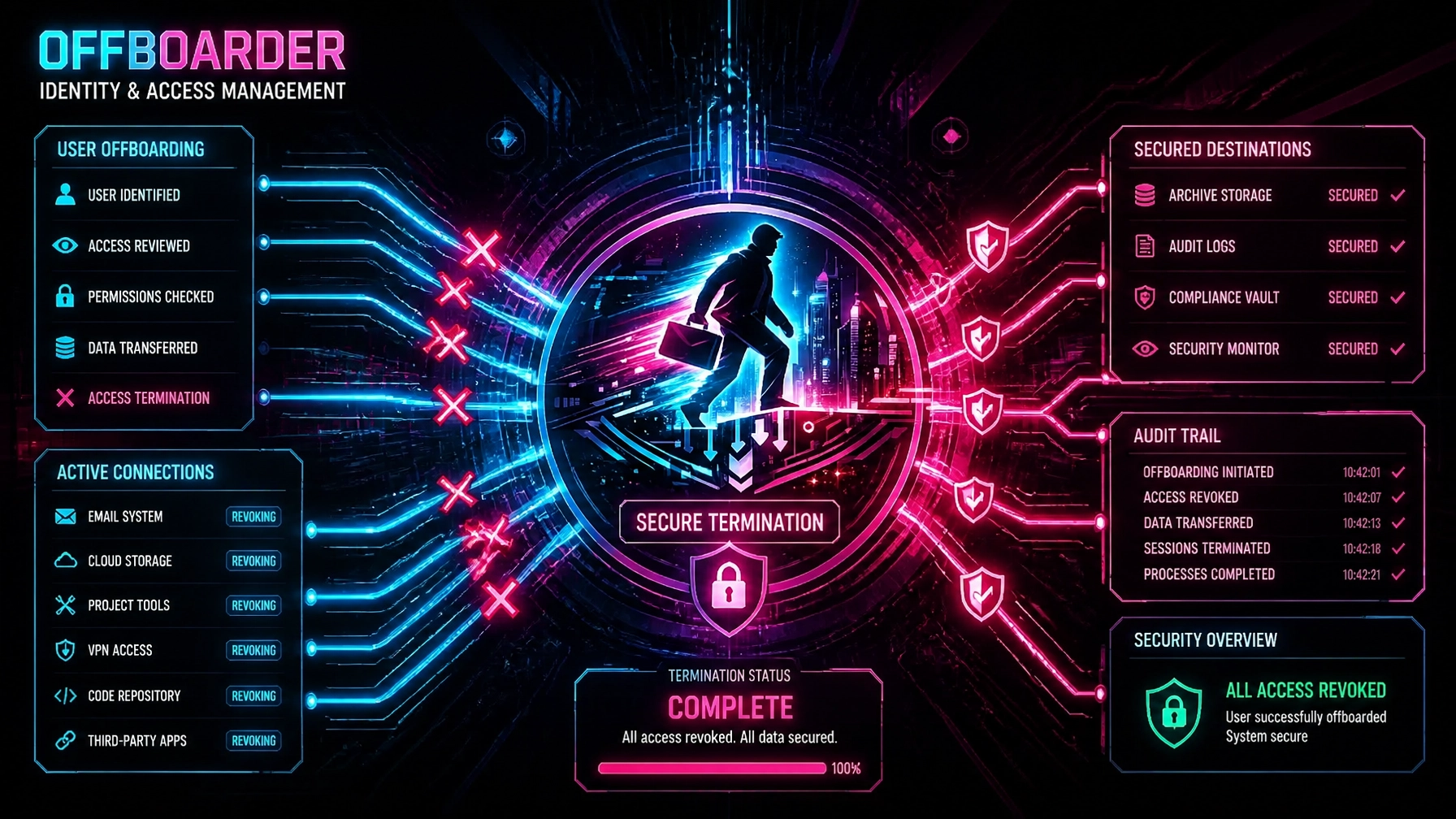
Maintaining Identity and Access Management (IAM) compliance is a high-stakes requirement for any organization handling sensitive data. For those navigating ISO 27001 or SOC 2 audits, the process of removing access when an employee leaves: offboarding: is often the weakest link in the security chain.
A single "ghost account" or a delayed termination can create a control gap that leads to audit failure or, worse, a preventable security breach. Organizations frequently rely on fragmented processes that fail to meet the rigorous evidence and speed requirements of modern regulatory frameworks.
Addressing these vulnerabilities requires a shift from manual workflows to automated governance. Below are seven common mistakes companies make with offboarding IAM compliance and the specific technical resolutions to fix them.
1. Relying on Manual Notification Chains
Many organizations initiate offboarding via an email from HR or a Slack message to an IT manager. This creates a reliance on human intervention, which is inherently inconsistent and prone to delays. If the notification is missed or buried in an inbox, the "access window": the time between termination and revocation: remains open.
The Fix: Establish HR as the Authoritative Trigger
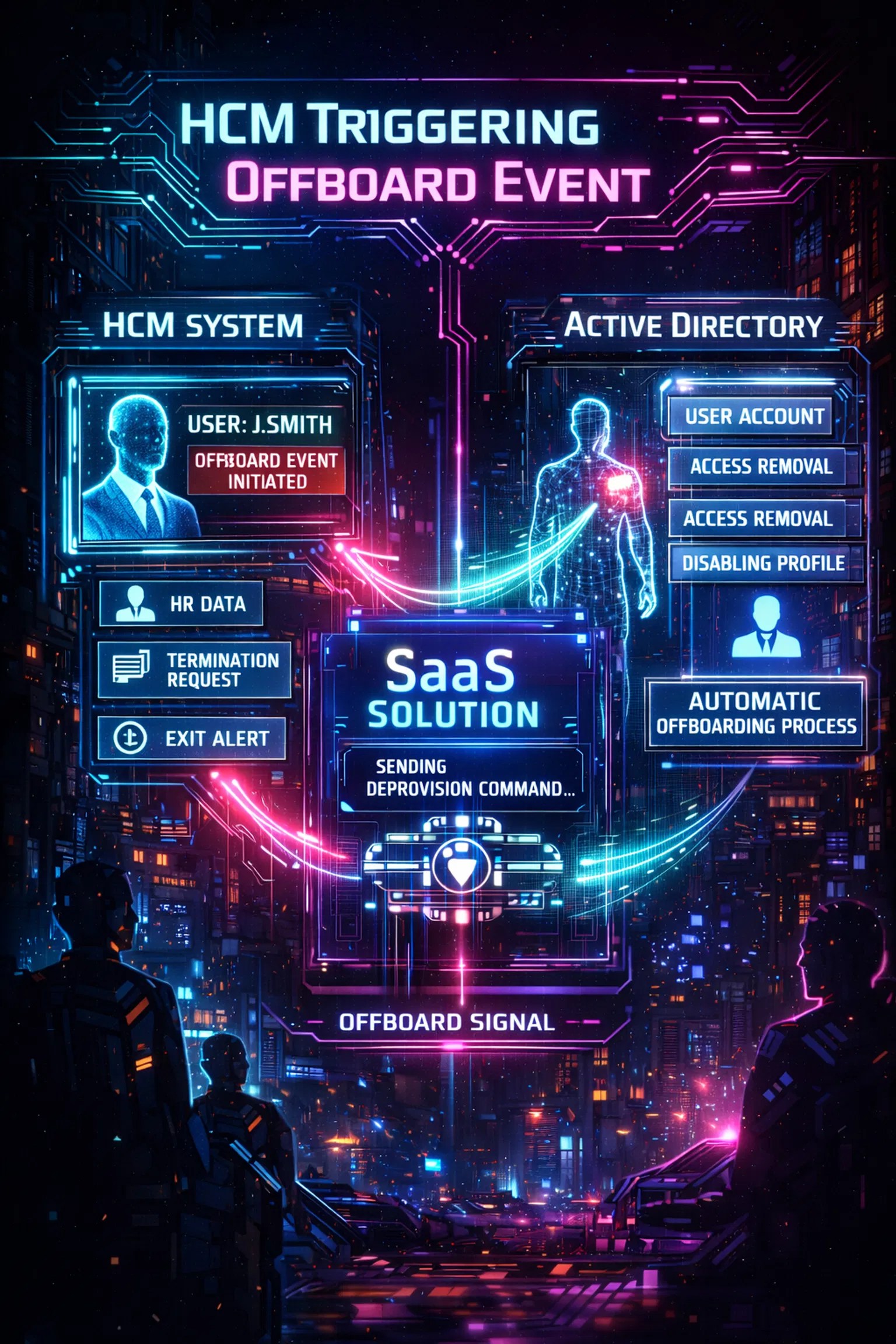
Compliance standards like SOC 2 require a defined and repeatable process for deprovisioning. The solution is to integrate the platform directly with your Human Capital Management (HCM) system. When HR marks an employee as terminated, the automated offboarding workflow should trigger immediately, removing the need for manual tickets or "heads-up" emails.
2. Inconsistent Coverage Across Hybrid Environments
A common mistake is focusing exclusively on cloud applications while neglecting on-premises infrastructure like Active Directory or legacy servers. Auditors expect logical access control to be universal across the entire environment. Leaving an active VPN or local server account open while disabling a Microsoft 365 seat is an incomplete control.
The Fix: Implement Multi-Domain Identity Matching
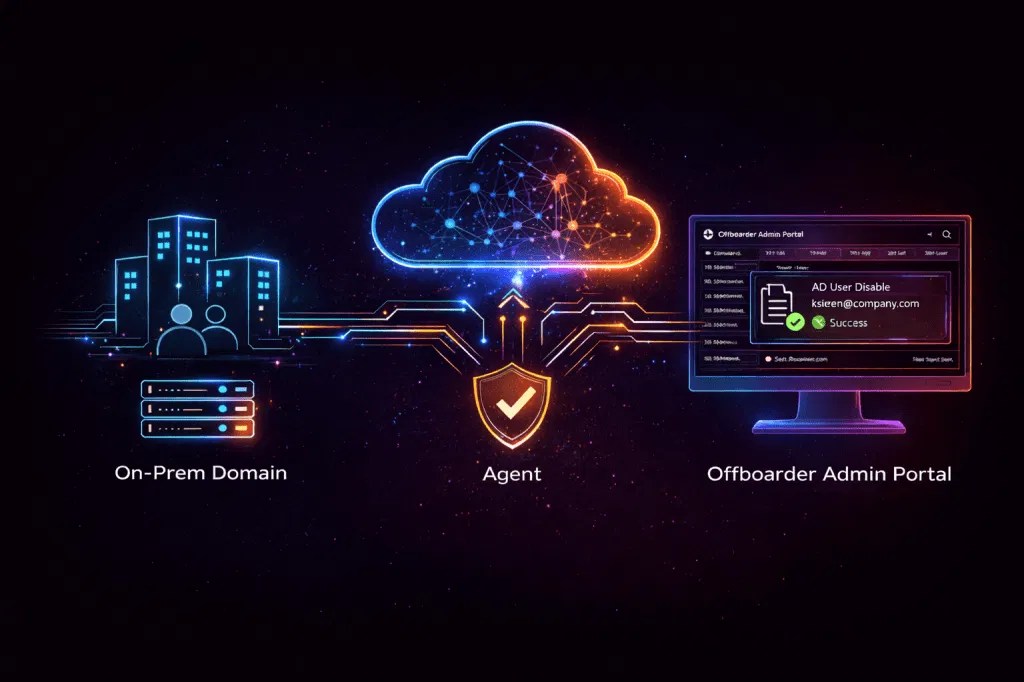
The platform must support a hybrid architecture that bridges cloud-native systems with on-prem directories. By using a lightweight agent to communicate with on-prem domains, you can ensure that a single termination command propagates across both local and cloud environments simultaneously. This ensures that no "dark" accounts remain active after a departure.
3. Lack of Centralized Audit Evidence
During an audit, "we think we did it" is not an acceptable answer. Most teams struggle to produce a unified report showing exactly when access was removed across ten different systems. Scrambling to pull logs from individual SaaS apps at the last minute is a significant operational risk and often results in missing data.
The Fix: Automated Evidence Capture
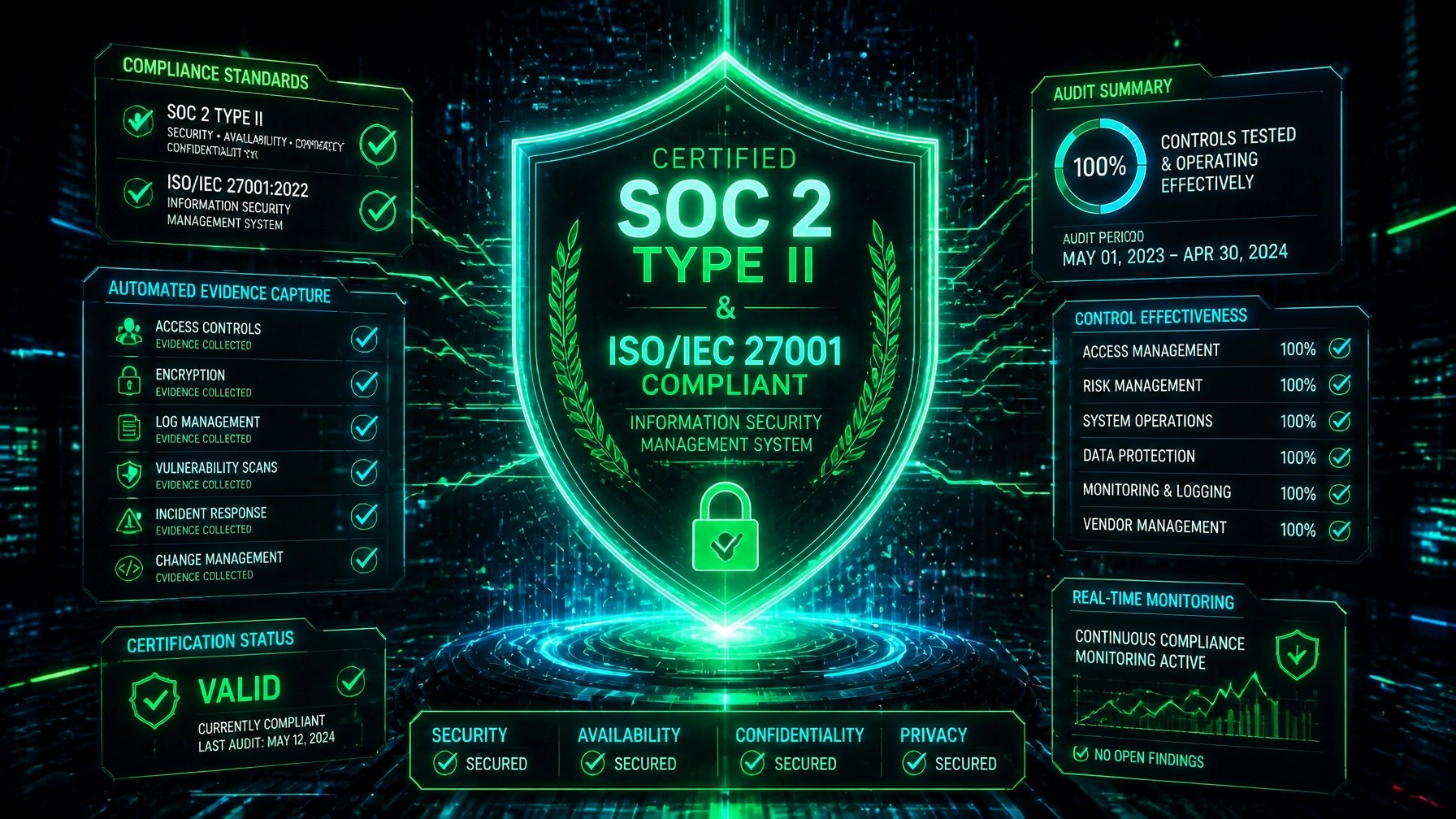
Governance requires tamper-resistant proof of closure. Every offboarding action should be recorded in a centralized audit-ready log that captures the date, time, system, and result of each deprovisioning step. This turns activity into accountability, allowing you to provide auditors with comprehensive evidence in minutes rather than days.
4. Failing to Account for Contractors and Vendors
ISO 27001 Annex A 6.5 specifically mandates that offboarding responsibilities apply to all personnel, including contractors and third-party users. However, these identities often lack a formal "termination date" in the primary HR system, leading to permanent access for people who haven't worked with the company in years.
The Fix: Standardize Non-Employee Offboarding Lifecycles
Contractors must be managed with the same rigor as full-time employees. If they are not in the HCM, they should be tracked in a secondary authoritative source that triggers the same automated deprovisioning steps. Establishing a hard "expiration date" for external accounts ensures that access defaults to closed rather than remaining open indefinitely.
5. Ignoring Internal Transfers and Role Changes
Compliance isn't just about people leaving the company; it’s about people leaving specific roles. "Privilege creep" occurs when an employee moves from Finance to Marketing but retains their access to accounting software. Auditors view this as a failure of the "Least Privilege" principle.
The Fix: Treat Role Changes as a Termination-Reboarding Event
To maintain a tight control environment, a role change should trigger a standard offboarding workflow to strip the old permissions before new ones are granted. Automated systems can compare the new identity state against the old, ensuring that only the necessary access remains. This keeps the identity lifecycle clean and compliant with internal audit requirements.

6. Manual Verification "Taxes" on Lean IT Teams
Even when access is revoked, many organizations have no way to verify it happened without manual spot-checks. This "verification tax" consumes hours of engineering time. If a manual step fails and no one checks it, the control gap persists until the next audit cycle.
The Fix: Automated Success Confirmation
The service must not only send a "disable" command but also receive and record a "success" confirmation from the target system. By automating the verification loop, the platform provides immediate visibility into any failures. High-stakes offboarding demands a closed-loop system where "done" actually means "verified."
7. Shadow IT and Forgotten SaaS Seats
Visibility gaps are the primary cause of offboarding failures. IT departments often manage the "Big 3" (Email, IdP, Slack) but miss the niche SaaS tools used by individual departments. If a user retains access to a departmental CRM or project management tool, the company remains liable for that data.
The Fix: Comprehensive System Inventory and Mapping
Mapping your identity footprint is a prerequisite for IAM compliance. The platform should support flexible identity matching that links a single human identity to various accounts across different domains. Centralizing these mappings allows you to automate the removal of access across the entire software stack, not just the core systems.
Conclusion: Turning Complexity into Control
The risks associated with manual employee offboarding are no longer acceptable in a regulated business environment. From missed accounts to missing evidence, manual processes create vulnerabilities that auditors and threat actors alike are quick to exploit.
By automating the offboarding lifecycle: from HR trigger to verified closure: organizations can close control gaps, reduce operational risk, and ensure they are always audit-ready. Standardizing your approach to IAM compliance turns a complex, high-stakes burden into a predictable, automated background process.
Strong logging and automated triggers help turn activity into accountability.
Leave a Reply