

Startups today face a paradox: to win enterprise contracts, they must prove enterprise-grade security via SOC 2 or ISO 27001. Yet, most early-stage companies lack the massive IT departments required to manage the complex overhead of identity governance. The result is a dangerous reliance on manual checklists and "best effort" account closures that inevitably fail during an audit.
The most common point of failure in a SOC 2 audit is the leaver process. When an employee departs, their access to sensitive systems must be terminated immediately. If a single account in a legacy domain or a secondary SaaS tool remains active, the control gap is clear, and the audit finding is certain.
There is a simple trick to solving this without hiring a dedicated IAM team: move the source of truth from IT to HR. By implementing hr triggered offboarding, startups can automate the entire lifecycle and produce tamper-resistant audit evidence for access removal in seconds.
The Compliance Gap: Why Manual Offboarding Fails Audits
In a manual environment, the offboarding process typically starts with an email or a Slack message from HR to IT. This human handoff is the primary source of risk. IT professionals, often juggling high-priority tickets, may miss a specific system or delay the termination by several days.
Auditors do not care about intent; they care about the timestamp. If an employee was terminated on Friday at 5:00 PM and their Active Directory account wasn't disabled until Monday morning, the control has failed. This delay creates a window of vulnerability where "ghost access" can be exploited.
Furthermore, manual processes rarely produce consistent iso 27001 offboarding evidence. Capturing a screenshot of every disabled account across twenty different platforms is a soul-crushing task that is prone to error. Without a centralized way to produce audit evidence for access removal, your team will spend hundreds of hours in "evidence collection mode" every year.
The Problem with Enterprise IAM Tools for Startups
When searching for the best IAM tools, many startups look toward legacy giants like SailPoint or Okta Lifecycle Management. While these tools are powerful, they are often overkill for a lean team. They require months of implementation, specialized consulting, and a price tag that can cripple a growing company's budget.
The market has long lacked an affordable IAM solution that provides enterprise-level control without the enterprise-level complexity. Startups need a SailPoint alternative for small business that focuses on the core problem: getting people out of systems as fast as they came in.
Offboarder serves as a streamlined Okta lifecycle management alternative specifically designed for organizations that need to meet rigorous compliance standards without the bloat. It provides a direct path to automated user deprovisioning by listening to the only signal that matters: the HR system.
The Simple Trick: HR as the Authoritative Trigger
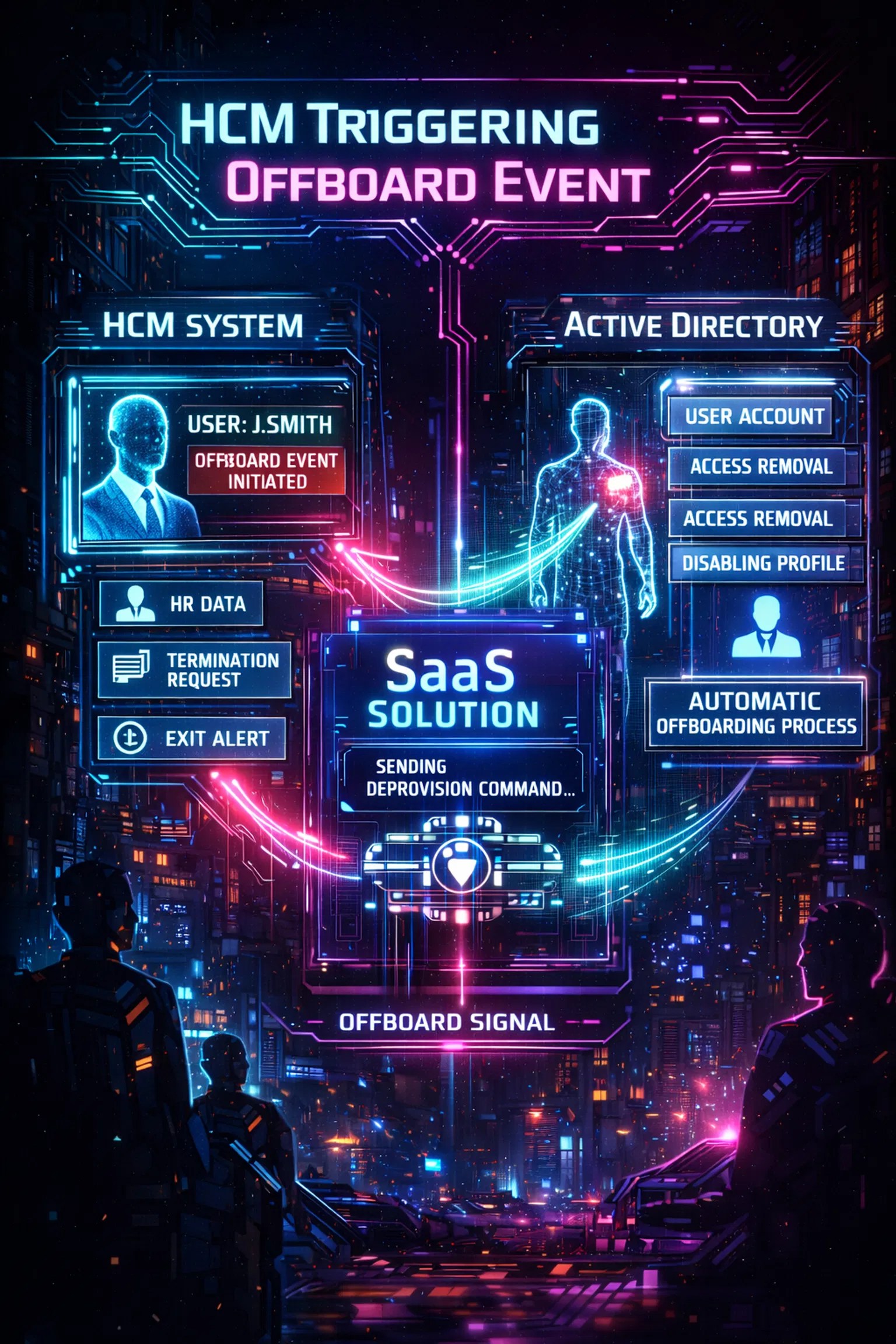
The most effective way to secure your environment is to eliminate the middleman. In an automated workflow, the moment an HR manager marks an employee as "Terminated" in the payroll or HCM system, a signal is sent to the identity layer.
This hr triggered offboarding approach ensures that the "leaver" process is synchronous with the business reality. The platform detects the change and immediately initiates offboarder logical access termination across all connected domains. There is no ticket to lose and no manual step to forget.
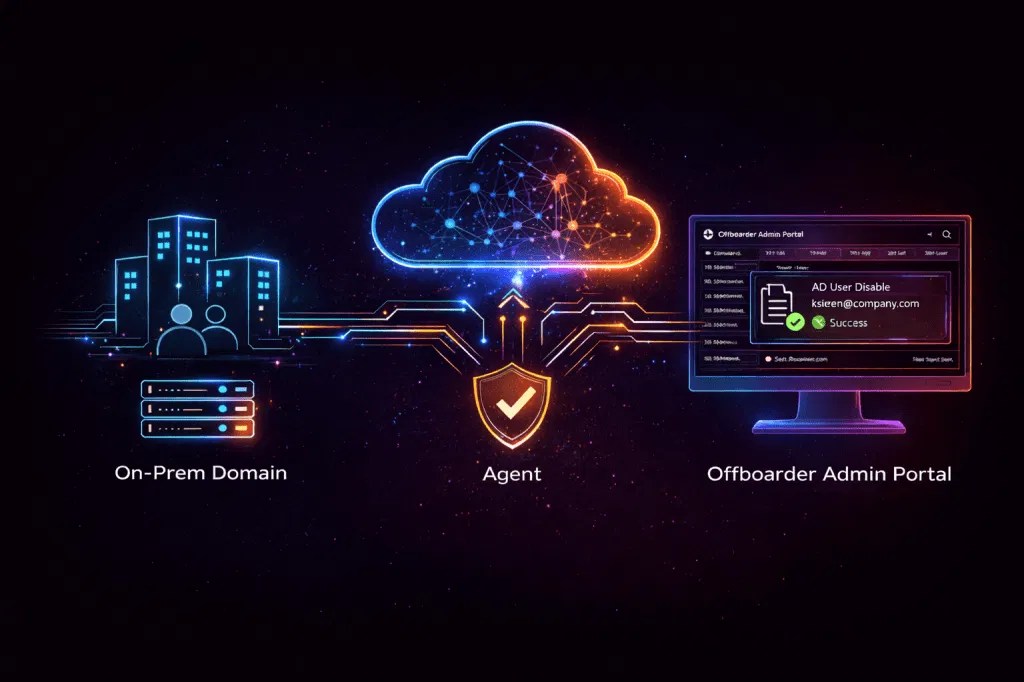
For companies managing hybrid environments, this automation must extend beyond the cloud. Multi domain active directory management is a common sticking point for startups that have acquired legacy systems or maintain on-prem infrastructure. Using a lightweight, secure agent, the platform can reach into local domains to disable accounts as reliably as it handles SaaS apps.
Turning Activity into Accountability
A control is only as good as its documentation. In a SOC 2 or ISO 27001 audit, the burden of proof is on the organization. You must prove not only that you intended to remove access but that you actually did so within your defined SLA.
The platform automatically generates a comprehensive audit trail for every termination event. This includes:
- The exact timestamp of the HR trigger.
- A log of every system where access was revoked.
- Confirmation of success (or immediate alerts for failures) across all domains.
- A centralized report that serves as the definitive soc 2 offboarding controls evidence.
By centralizing this data, the platform turns a complex IT task into a simple governance win. You can view our use cases to see how different industries leverage this automation to stay audit-ready.
Multi-Domain Management and Identity Matching
One of the greatest technical challenges in identity governance for startups is identity matching. Employees often have different usernames across different systems (e.g., j.doe in Active Directory but john.doe@company.com in Google Workspace).
Manual offboarding requires the IT admin to know every alias for every user. Automated employee offboarding software solves this by using flexible identity matching logic. The platform maps these disparate identities to a single human being, ensuring that when "John Doe" leaves, every one of his digital shadows is extinguished simultaneously.
This level of precision is essential for employee termination access removal. It eliminates the "orphaned account" problem where a former employee retains access to a niche dev tool or an old VPN gateway because it wasn't on the primary IT checklist.
Cost-Effective Compliance for Lean Teams
Startups cannot afford to waste engineering hours on repetitive administrative tasks. Every hour spent manually deprovisioning users is an hour taken away from product development.
Investing in best employee offboarding software is not just a security decision; it is a financial one. By reducing the time spent on manual offboarding and evidence collection, the platform provides a clear ROI. You can review our pricing to find a plan that fits your current stage of growth.
The platform acts as a force multiplier for your security team. It ensures that your soc 2 offboarding controls are always "on," providing a level of consistency that manual processes simply cannot match. This consistency is exactly what auditors look for when assessing the maturity of a startup's security program.

Conclusion: The Path to Zero-Touch Offboarding
Automating your offboarding process is the single most impactful step you can take to strengthen your logical access controls. It removes human error, closes the window of vulnerability, and provides the documentation needed to pass audits with ease.
The "simple trick" isn't magic, it's a commitment to a process where HR and IT are perfectly aligned through automation. By moving away from manual checklists and toward a platform designed for automated user deprovisioning, startups can finally achieve enterprise-grade governance without enterprise-grade headaches.
Consistency in offboarding creates a foundation of trust. When your customers and auditors see that access is revoked instantly and evidenced perfectly, they see a company that takes security seriously. Strong logging and automation help turn daily activity into long-term accountability.
Frequently Asked Questions
Does SOC 2 require automated offboarding?
No, SOC 2 does not strictly require automation. However, it does require that access removal is timely, consistent, and evidenced. Automation is the most reliable way to meet these criteria and is highly recommended by auditors for its ability to reduce human error.
What is the difference between Okta LCM and Offboarder?
While Okta Lifecycle Management is a robust tool for large enterprises, it can be complex and expensive to implement. Offboarder offers an affordable IAM solution focused specifically on the offboarding lifecycle, making it an ideal Okta lifecycle management alternative for startups and mid-market companies.
How does Offboarder handle on-prem Active Directory?
The platform uses a secure, lightweight on-prem agent that communicates with the cloud portal. This allows for multi domain active directory management, enabling the system to disable local accounts automatically when triggered by a cloud-based HR system.
Can I get audit evidence for ISO 27001?
Yes. The platform is built specifically to produce audit evidence for access removal. It generates detailed logs and reports that meet the requirements for both SOC 2 and iso 27001 offboarding evidence.
Leave a Reply