

Maintaining compliance with frameworks like ISO 27001 and SOC 2 requires more than a simple offboarding checklist. Modern organizations are moving toward continuous control monitoring (CCM) to ensure that logical access is terminated the moment an employee leaves. However, many of these "continuous" programs are failing to provide the security and audit-readiness they promise.
A control gap in your termination process is a direct invitation for unauthorized access. When monitoring fails, it creates a blind spot that auditors will eventually find, often leading to a qualified audit report or a significant security incident.
Here are the 10 most common reasons your continuous termination control monitoring isn't working and the technical resolutions to fix them.
1. HR is Not the Authoritative Trigger
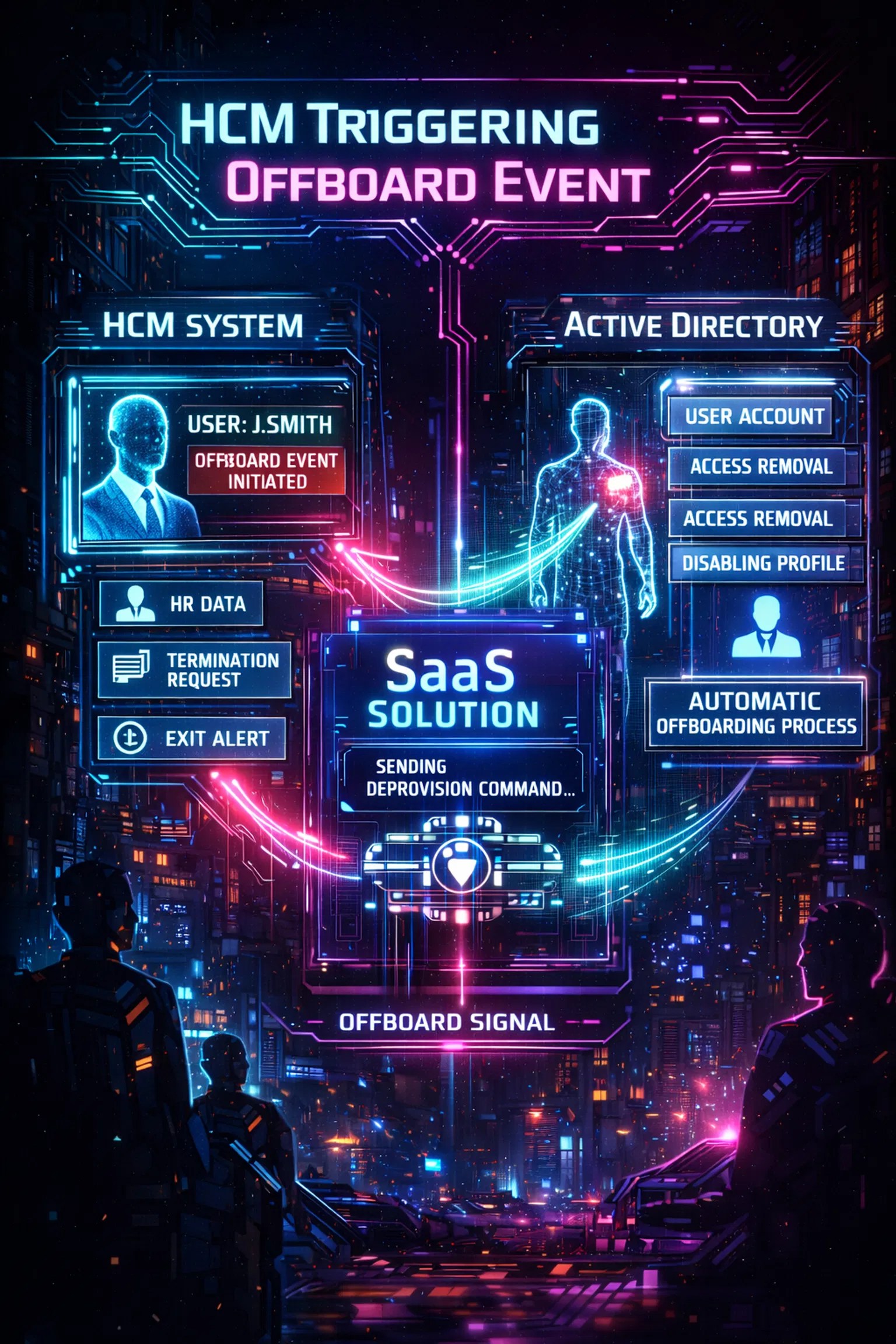
In many organizations, IT only begins the offboarding process after receiving a ticket from a manager or an email from HR. This manual handoff is the primary source of latency and error. If HR data is not the authoritative trigger, your monitoring is essentially reactive, not continuous.
The resolution is to implement an HR-triggered automation model. The Offboarder platform integrates directly with your Human Capital Management (HCM) system to detect termination events in real-time. When a status changes in HR, the deprovisioning workflow must start immediately without human intervention.
2. Inconsistent Source of Truth
Monitoring often fails because different systems hold different versions of "the truth." HR might list a termination date of Friday, but the Identity Provider (IdP) shows the account as active until Monday. If your monitoring tool cannot reconcile these discrepancies, it will produce false negatives.
You must establish a single source of truth for identity status. Every downstream system: from Active Directory to niche SaaS apps: must be continuously audited against the HR record. Cross-domain identity matching ensures that even if a username differs slightly between systems, the control still applies.
3. The "Shadow IT" Coverage Gap

Continuous monitoring is only effective if it covers 100% of your environment. Most organizations monitor their primary SSO (like Okta or Azure AD) but ignore unmanaged SaaS applications or local accounts on legacy servers. These "orphaned" accounts are a massive liability during a SOC 2 audit.
To fix this, your monitoring must extend beyond the IdP. You should inventory all applications: managed and unmanaged: and implement a solution that can reach into these "dark" corners. High-stakes governance requires visibility into every system where user data or company IP resides.
4. Latency Between Event and Action
Monitoring is not "continuous" if it only runs once a week or once a month. Many organizations rely on periodic scripts that export CSVs for manual review. This "point-in-time" approach creates a window of vulnerability where a terminated employee could still access sensitive systems.
True CCM requires real-time alerting. You should move away from sampling and toward a stream-based monitoring architecture. The goal is to reduce the "time-to-revocation" to minutes, ensuring that evidence capture happens as the event occurs, not weeks later.
5. Lack of Tamper-Resistant Evidence
Auditors don't just want to know that you removed access; they want proof. If your monitoring evidence consists of manual screenshots or editable spreadsheets, it lacks integrity. Auditors for ISO 27001 and SOC 2 look for tamper-resistant logs that provide a clear audit trail.
The platform you use should automatically generate audit-ready evidence for every termination. This includes timestamps, system logs, and confirmation from the target application that the account was disabled. Automated evidence capture turns activity into accountability without adding to your team's workload.
6. Fragmented Ownership and Accountability
When a termination control fails, who is responsible? Often, HR blames IT, IT blames the system admin, and Security blames the lack of budget. This fragmentation ensures that gaps are never permanently closed.
Ownership must be centralized through a governed process. By using a specialized offboarding solution, you create a unified dashboard where Compliance, HR, and IT can all see the status of every termination. Centralized governance eliminates the "finger-pointing" that occurs during an audit failure.
7. Complexity of Hybrid and On-Prem Systems
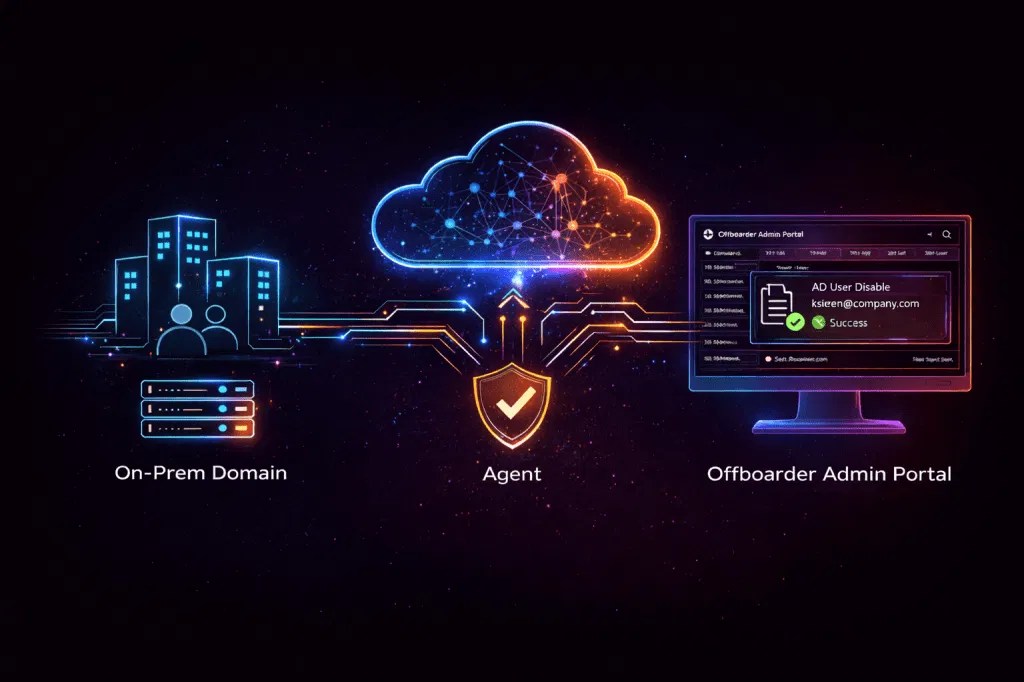
Cloud-native monitoring tools often struggle to "see" into on-premises environments. If your organization uses a mix of cloud SaaS and legacy Active Directory, your monitoring likely has a massive blind spot. Many "modern" IAM tools simply cannot handle the complexities of local account removal.
The solution is a hybrid-ready architecture. Using a lightweight, secure on-prem agent allows your cloud monitoring platform to safely communicate with local domains. This ensures that a termination command in the cloud successfully disables the user in the data center, providing a complete picture of access control.
8. Ignoring Contractors and Third Parties
Non-employee identities: contractors, vendors, and interns: often sit outside the primary HR system. Because they aren't "employees," they are frequently missed by automated termination triggers. This leaves high-privileged accounts active long after a contract has ended.
You must treat every identity as a governed entity. Whether they are in your HCM or a separate vendor management system, these users must be included in your continuous monitoring scope. Consistency in how you handle different user types is a hallmark of a mature security program.
9. Manual Data Exports are Not Monitoring
If your "continuous monitoring" process involves a team member downloading a report and checking it against a list, it is not a control: it is a manual task. Human error is the most significant risk factor in offboarding. A tired analyst might miss a row in a spreadsheet, leaving an account active.
Automation is the only way to achieve the scale required for modern compliance. The platform should handle the heavy lifting of data collection and comparison. This allows your team to focus on resolving exceptions rather than performing tedious data entry.
10. Alert Fatigue and Poor Tuning
Continuous monitoring can sometimes produce too much noise. If your system flags every minor sync delay as a "critical failure," your team will eventually stop paying attention. Alert fatigue leads to real security gaps being ignored.
Effective monitoring requires fine-tuned logic. Your system should distinguish between a transient API error and a genuine failure to revoke access. By setting clear thresholds and severity levels, you ensure that your security team only intervenes when a real risk is detected.
The Path to Audit-Ready Automation
Fixing these ten issues requires a shift in how your organization views offboarding. It is no longer just an "IT task"; it is a foundational security and compliance control.
By implementing an automated, HR-triggered solution, you close the control gaps that lead to audit failures and security breaches. The ability to provide consistent, real-time evidence of access termination is the standard that regulators and auditors now expect.

Summary of Next Steps:
- Audit your trigger: Ensure HR is the source of all termination events.
- Expand your scope: Include on-prem, SaaS, and contractor accounts.
- Automate evidence: Move from manual screenshots to system-generated logs.
- Centralize governance: Use a single platform to monitor the entire lifecycle.
Continuous termination control monitoring is not a "set and forget" project. It requires the right tools and a commitment to process discipline. Organizations that prioritize these controls find that they not only pass audits more easily but also significantly reduce their operational risk.
Strong logging and automated deprovisioning help turn everyday IT activity into permanent organizational accountability.
Leave a Reply