

Manual deprovisioning is a systemic vulnerability. Organizations often rely on a fragile chain of emails, tickets, and spreadsheets to remove employee access. This reliance on human memory and manual handoffs creates significant security gaps.
When an employee departs, the window between their exit and the actual termination of their digital identity is a high-risk period. Traditional methods are slow, inconsistent, and prone to error. A single missed account can lead to unauthorized access, data exfiltration, or a failed compliance audit.
The solution lies in shifting the "source of truth" for identity management. By utilizing an HR-triggered offboarding approach, organizations can automate the entire deprovisioning lifecycle. This method ensures that the moment a departure is recorded in the Human Capital Management (HCM) system, access removal begins across all domains.
The Problem with Manual Handoffs
In most enterprises, offboarding is a fragmented process. It typically begins with an HR notification sent to an IT manager, who then delegates tasks to various system administrators. Each handoff is an opportunity for delay or miscommunication.
These manual steps result in "zombie accounts": active credentials belonging to former employees. These accounts are prime targets for malicious actors and represent a fundamental breakdown in logical access control. Research suggests that a significant percentage of security breaches involve the use of valid credentials from departed staff.
Furthermore, manual processes lack the rigor required for modern regulatory environments. Relying on a "best effort" approach makes it impossible to provide consistent, tamper-resistant evidence during an audit. Manual handoffs create a visibility vacuum that hinders risk management.
HR as the Authoritative Trigger
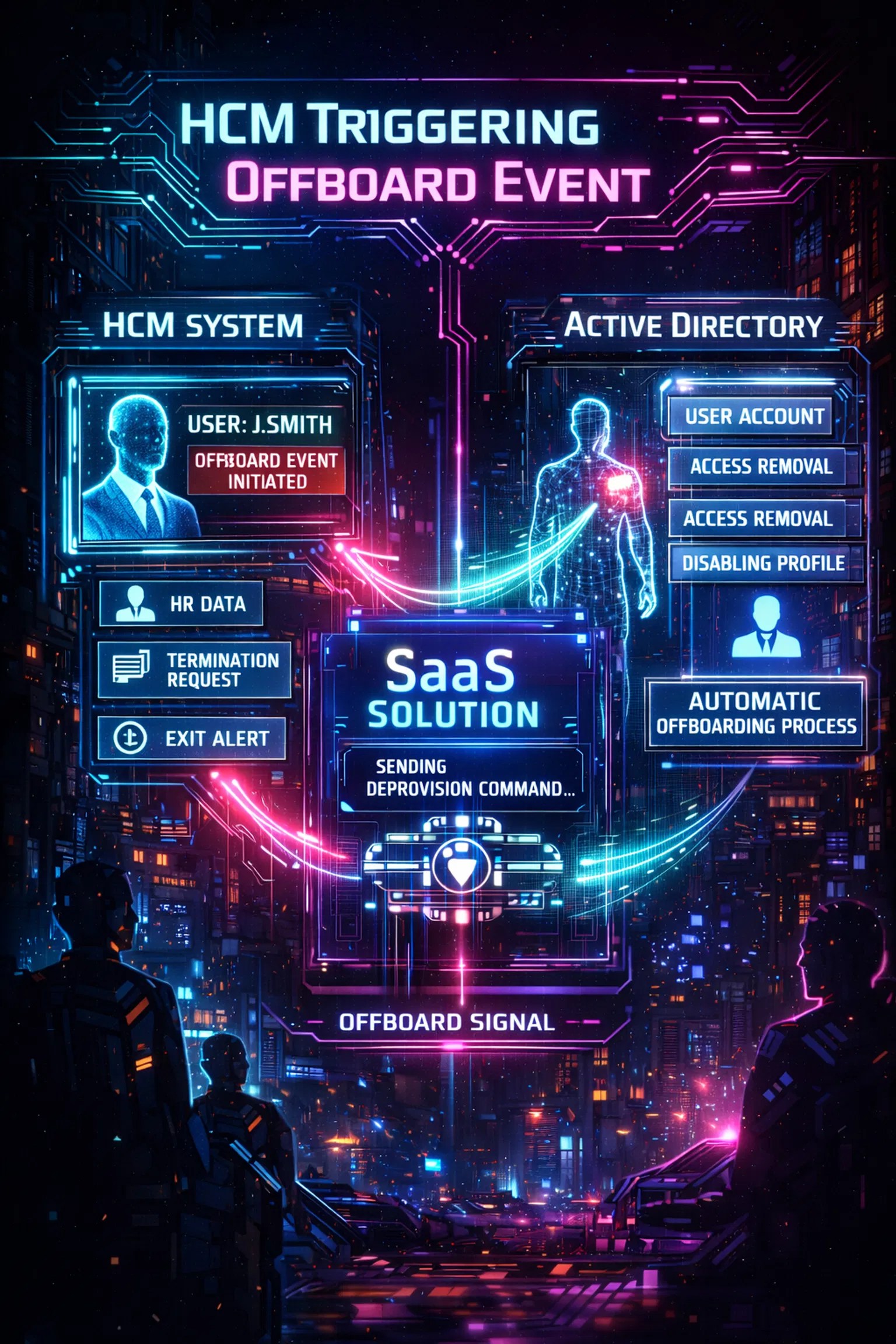
The transition to HR-triggered offboarding fundamentally changes the identity governance landscape. In this model, the HR system acts as the authoritative trigger for all downstream access changes. When an employee's status changes to "Terminated" in the HRIS, the platform automatically initiates deprovisioning protocols.
This "HR-as-the-source" approach eliminates the need for IT to wait for manual tickets. It ensures that the timing of access removal is perfectly synchronized with the employee's official departure date. By removing the human element from the initiation phase, organizations can achieve near-instantaneous deprovisioning.
Standardizing the lifecycle through an authoritative source creates a predictable and repeatable process. It removes the ambiguity of "who needs to do what" and replaces it with a defined, automated workflow. This transition is essential for any organization aiming to improve its security posture.
Centralizing the trigger in HR ensures that access control is driven by business reality rather than IT ticket queues.
Eliminating the "Control Gap"
A control gap exists whenever a security policy is not consistently enforced. In offboarding, this gap is most visible in the time delay between an employee leaving and their access being revoked. Automated offboarding bridges this gap by providing high-speed, multi-domain support.
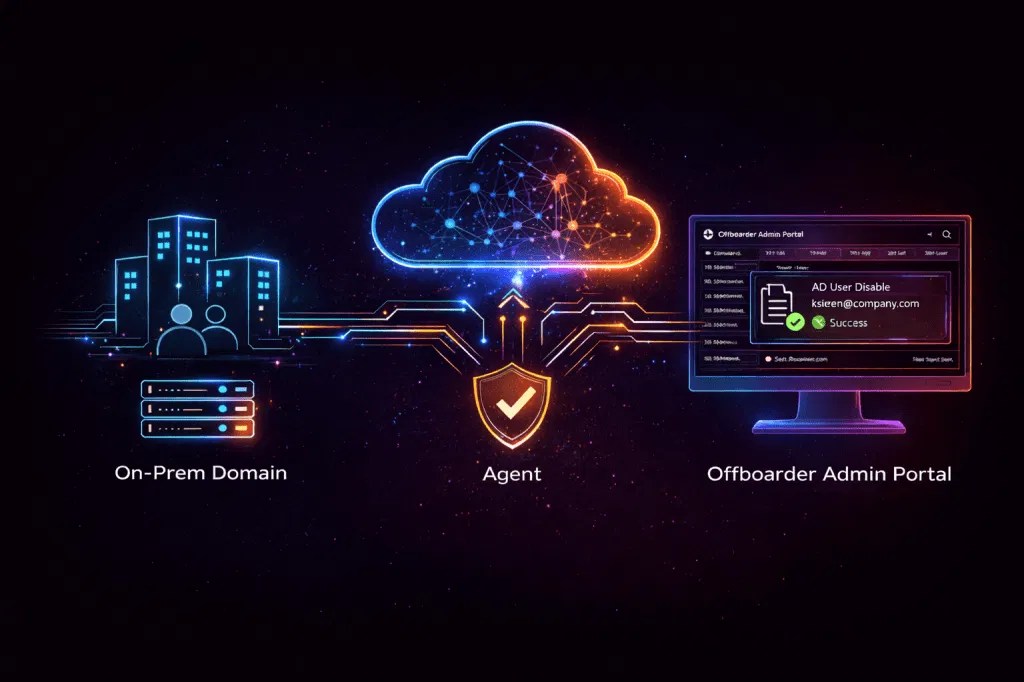
The Offboarder platform is designed to handle complex environments, including on-premises and cloud-native systems. Through a lightweight on-prem agent and flexible identity matching, the system can locate and disable accounts across Active Directory, SaaS applications, and custom databases simultaneously.
This comprehensive coverage is critical because security is only as strong as its weakest link. Automating access removal in G Suite but forgetting a legacy VPN account still leaves the organization exposed. Automation ensures that every system identified in the offboarding profile is addressed without fail.

Achieving Audit-Readiness and Compliance
Compliance frameworks like ISO 27001 and SOC 2 require strict logical access controls. Auditors look for proof that access is terminated promptly and that the process is documented. Manual processes struggle to provide this level of detailed evidence.
The service provides comprehensive audit-ready evidence generation. Every action taken by the platform is logged, creating a tamper-resistant record of who lost access to what, and exactly when it happened. This documentation is captured automatically, saving teams hundreds of hours of manual report preparation.
For GRC managers and Internal Audit teams, this level of transparency is transformative. Instead of chasing down system admins for screenshots or log files, they can access a centralized dashboard of successful terminations. This visibility turns offboarding from a source of anxiety into a demonstrated strength of the organization’s governance program.

Reducing Operational Risk and Technical Debt
Manual offboarding is not just a security risk; it is an operational burden. Lean IT teams often spend significant time on repetitive administrative tasks that could be automated. This "to-do list" approach to security creates technical debt and diverts resources from high-value projects.
By implementing automated offboarding, organizations reduce the operational risk associated with human error. There are no forgotten steps, no lost emails, and no missed deadlines. The platform handles the complexity, allowing the IT team to focus on strategic initiatives.
The platform's built-in WAF protection and secure modern architecture further mitigate risk. It is designed to fit into existing workflows while providing a layer of security that manual processes cannot match. Standardizing the offboarding process is a proactive measure that pays dividends in both security and efficiency.
The Architecture of Certainty
To achieve true security, the offboarding architecture must be robust and reliable. The service utilizes a cloud-native platform paired with a secure on-premise agent. This hybrid approach allows for deep integration with internal directories while maintaining the ease of use of a SaaS solution.
The offboarding architecture ensures that the deprovisioning command is sent securely and executed precisely. Success notifications provide immediate confirmation that the user has been disabled, closing the loop on the termination request. There is no guesswork involved; only verified results.
This architecture supports multi-domain environments, making it suitable for large enterprises with complex identity structures. Whether an organization has 50 or 5,000 employees, the need for a scalable, automated solution remains the same. Consistency is the foundation of digital trust.
Conclusion: Setting the Standard for Access Control
Organizations must stop viewing offboarding as an administrative footnote. It is a critical component of termination access controls that requires precision, speed, and accountability. The shift from manual handoffs to HR-triggered automation is not just a technological upgrade; it is a fundamental shift in risk management philosophy.
By adopting an HR-as-the-authoritative-trigger approach, businesses eliminate the human errors that plague traditional deprovisioning. They replace uncertainty with a standardized, audit-ready workflow that protects sensitive data and satisfies regulatory requirements.
In a landscape where identity is the new perimeter, the ability to revoke access quickly is as important as the ability to grant it. Automation is the only way to achieve the speed and consistency required by modern security standards. Strong logging and automated triggers help turn activity into accountability.
Leave a Reply