

Compliance is often viewed as a bureaucratic hurdle, but for modern security teams, it is the frontline of defense. ISO 27001, specifically Annex A 5.16, mandates that access rights to information and other associated assets must be provisioned, reviewed, modified, and revoked in accordance with the organization’s policy. For most companies, the "revoked" part is where the system breaks down.
Manual offboarding is a significant security vulnerability. When an employee leaves, a ticket is created, it sits in a queue, and eventually, an IT admin manually disables accounts. In the window between the employee's departure and the manual revocation, the organization is exposed to internal threats and external breaches.
To "ace" an ISO 27001 audit, compliance teams must move beyond manual checklists. Auditors look for consistency, speed, and proof. Automation is the only way to satisfy all three requirements at scale.
The High Stakes of Access Control
The primary goal of ISO 27001 is to manage risk. A "control gap" exists whenever an ex-employee retains access to sensitive data for even an hour after their termination. This is not merely a technical oversight; it is a governance failure.
Orphaned accounts: active accounts belonging to former employees: are prime targets for attackers. Because these accounts are no longer monitored by a legitimate user, malicious activity can go undetected for months. By automating user deprovisioning, the organization effectively shrinks its attack surface to near zero the moment a person is no longer authorized to hold access.
Below are the five essential steps to automate this process and ensure your organization remains audit-ready.
Step 1: Integrate the HRMS as the Single Source of Truth
The most common mistake in access management is treating the IT department as the initiator of offboarding. IT usually learns about a termination through a manual email or a Jira ticket, which introduces human delay.
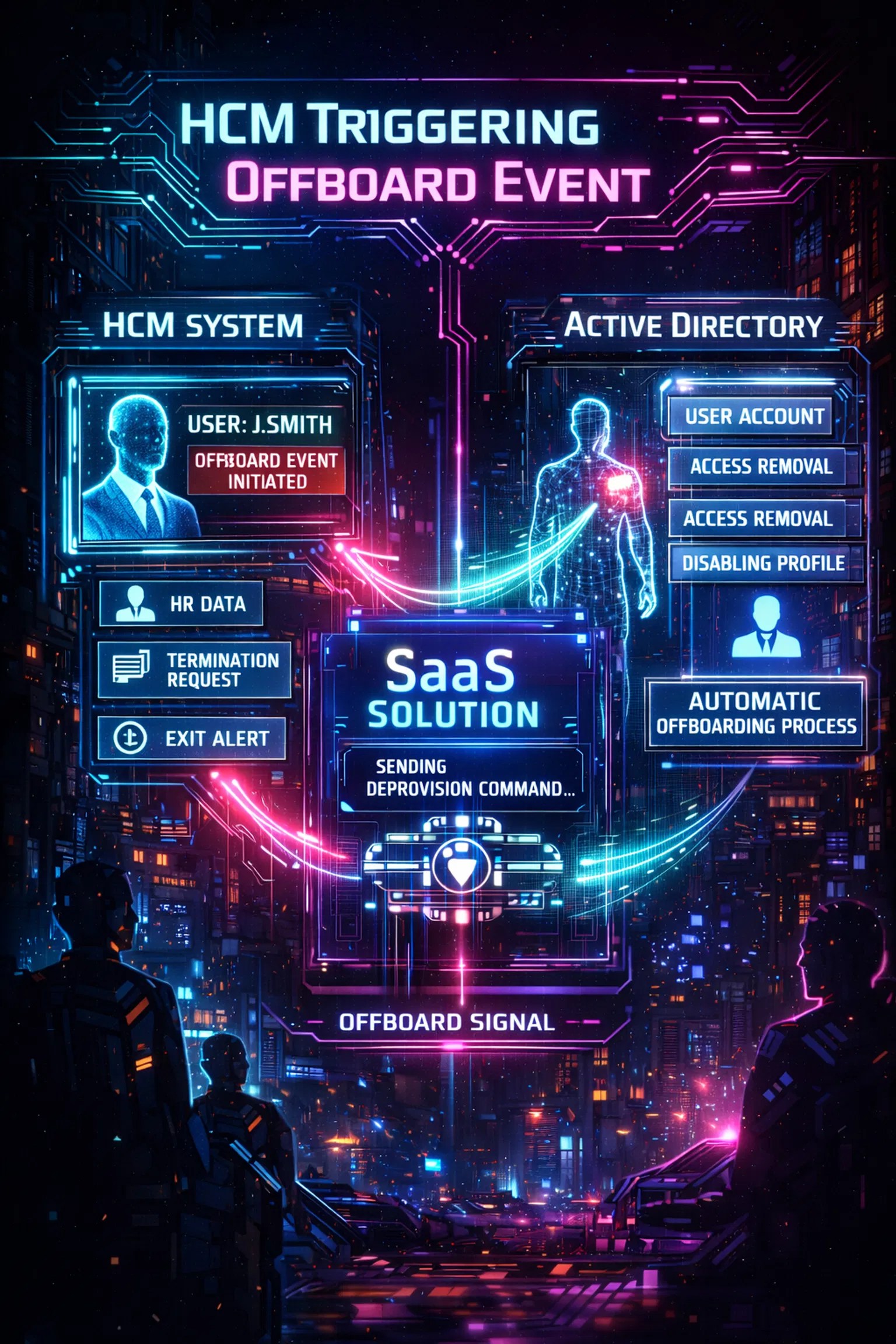
To achieve ISO 27001 compliance, the process must be HR-triggered. Your Human Resource Management System (HRMS) or HR portal already tracks the exact status of every employee. By integrating the HRMS directly with your Identity and Access Management (IAM) stack, you ensure that the security lifecycle mirrors the employment lifecycle.
When a person is marked as "terminated" in the HR system, that status change should serve as the primary signal for all downstream technical actions. This removes the "I forgot to send the email" risk from the equation. For a deeper look at this strategy, see why HR-triggered offboarding will change the way you think about user deprovisioning.
Step 2: Establish Immediate, High-Frequency Syncing
ISO 27001 auditors look for "promptness" in access revocation. A batch job that runs once a week: or even once every 24 hours: is often insufficient for high-risk roles. If an employee is terminated at 9:00 AM, but their access remains active until a midnight sync, the organization has a 15-hour window of exposure.
The platform should be configured to sync HR data with IT systems every 15 to 30 minutes. This high-frequency polling ensures that as soon as the HR department finalizes a departure, the technical revocation begins almost instantly.
Immediate deprovisioning should include:
- Disabling the primary directory account (Active Directory or Google Workspace).
- Invalidating active OAuth tokens.
- Killing existing web sessions across SaaS applications.
Promptness reduces the "operational risk" that auditors focus on during their assessments.
Step 3: Automate Multi-System Access Revocation
Most organizations suffer from "identity sprawl." An employee doesn't just have one account; they have dozens across AWS, GitHub, Salesforce, Slack, and internal proprietary databases. Revoking access to the primary directory is a good start, but it often leaves "pockets" of access in third-party SaaS tools.
The automation workflow must extend to all integrated systems. Using a centralized platform like Offboarder allows the organization to orchestrate the removal of access across the entire environment from a single command.
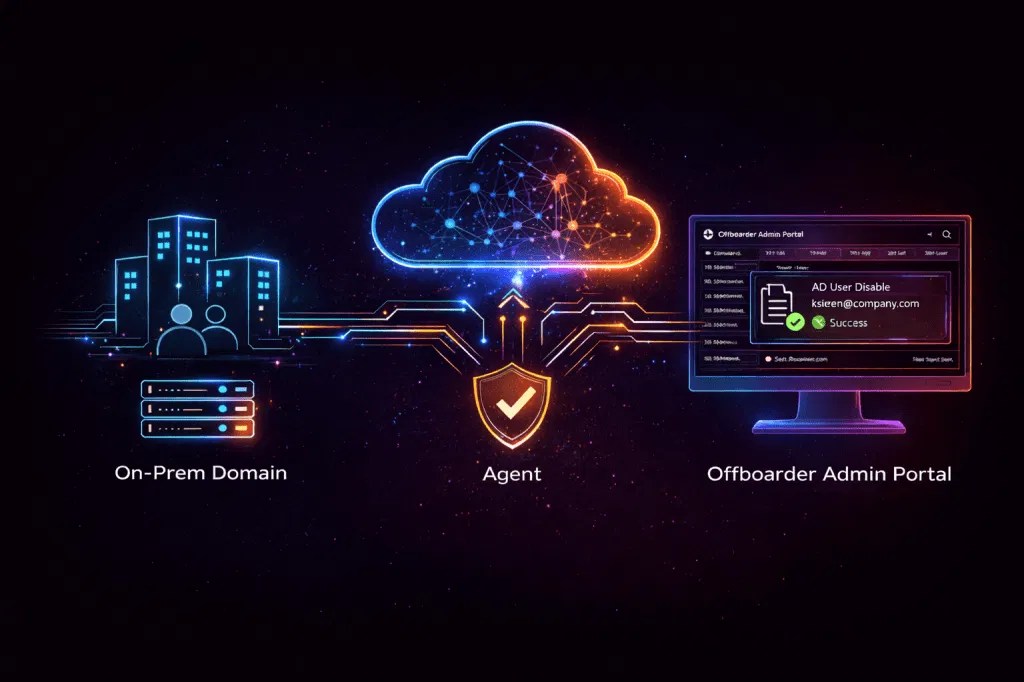
This holistic approach is critical for security and compliance. If an auditor asks to see the offboarding path for a specific user, you must be able to show that access was removed not just from the email system, but from every logical access point defined in your risk assessment.
Step 4: Implement Automated Stale Account Cleanup
ISO 27001 isn't just about people leaving the company; it's also about managing accounts that have become "stale" or dormant. Often, contractors or project-based workers finish their tasks, but their accounts remain active because no formal "termination" was ever processed in the HR system.
To ace your audit, you should implement automated dormancy rules:
- 45 Days Inactive: Automatically disable the account and move it to a restricted container.
- 90 Days Inactive: Automatically delete or archive the account data.
Automating these thresholds prevents the buildup of "ghost" accounts. It also satisfies the requirement for regular access reviews, as the system effectively performs a continuous review of who is actually using their permissions. You can learn more about common pitfalls in this area by reading 7 mistakes you're making with your access management lifecycle.

Step 5: Capture Tamper-Resistant Evidence and Audit Logs
The most important part of compliance isn't doing the work; it's proving the work was done. ISO 27001 auditors require "evidence capture." If you tell an auditor that you revoke access within 30 minutes, they will ask for a point-in-time report showing the termination timestamp in HR versus the revocation timestamp in Active Directory.
Manual logging is prone to error and "doctoring." Automated systems provide tamper-resistant audit trails. Every action: from the initial HR trigger to the final account deletion: is logged with a precise timestamp and success/failure status.
A robust audit log should include:
- The Actor: The automated system or HR admin who triggered the event.
- The Action: Specifically which permissions or accounts were removed.
- The Outcome: Confirmation from the target system (e.g., AWS or Salesforce) that the command was executed.
- The Timestamp: Critical for proving the "speed" of the control.
Strong logging helps turn activity into accountability, making the audit process significantly less stressful for the compliance team.
Why Automation is No Longer Optional
For companies operating in 2026, the volume of SaaS applications and the velocity of employee turnover make manual offboarding impossible to manage securely. Relying on humans to remember to click "delete" on 20 different dashboards is a recipe for a "finding" during your next ISO 27001 audit.
Beyond compliance, there is a clear business value to automation. It frees up IT resources from repetitive manual tasks and reduces the licensing costs associated with paying for seats that are no longer being used by active employees. Reviewing our pricing often reveals that the platform pays for itself simply through the automated reclamation of expensive SaaS licenses.
Summary Checklist for Compliance Teams:
- Map your systems: Identify every application that holds sensitive data.
- Define the trigger: Ensure HR is the starting point for all offboarding.
- Set the clock: Aim for revocation within 60 minutes of termination.
- Audit the process: Review your logs weekly to ensure the automation is firing correctly.
- Strengthen controls: Use the Offboarder overview to understand how to bridge the gap between HR and IT.
The transition from manual to automated deprovisioning is the single most effective step a compliance team can take to strengthen logical access controls. It replaces "best efforts" with "guaranteed outcomes."
If you are ready to see how this works in your specific environment, consider a free 30-day offboarding pilot. Testing these controls in a real-world scenario is the best way to prepare for a formal ISO 27001 certification.

Effective identity governance is not about having the most complex policies; it is about having the most consistent execution. By following these five steps, you transform access control from a manual chore into a seamless, automated, and audit-ready business process. Consistency in execution is the foundation of institutional trust.
Leave a Reply